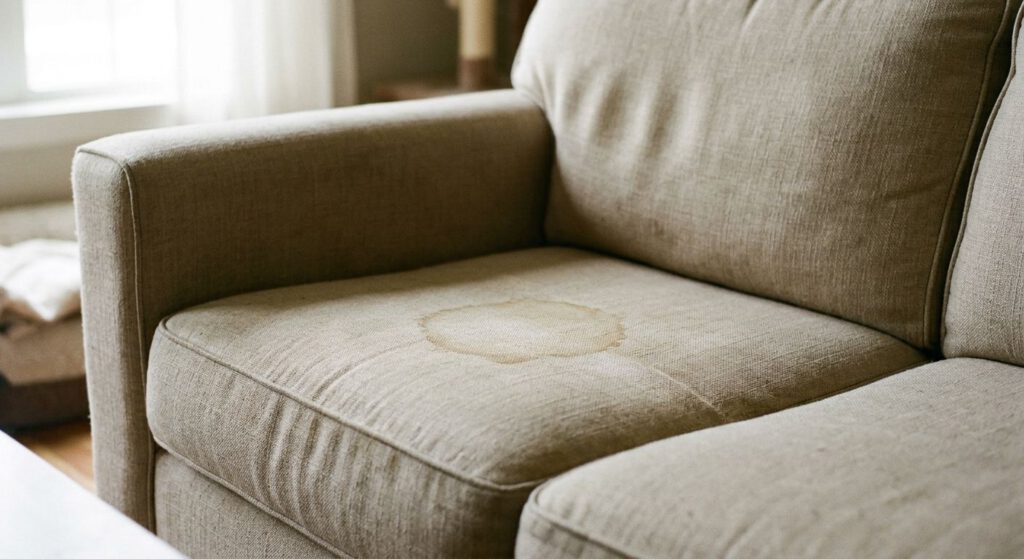
Imagine a glass of water tipping over, a damp towel left on the sofa, or someone gently wiping a small spill with a wet cloth. As the moisture evaporates, a few hours later, you might observe a pale ring or a brown edge on the upholstery that was not there before. Encountering a water stain on your couch can feel frustrating, especially since it was just water that caused it.
This comprehensive guide explores the reasons behind water stains on fabric couches, identifies which types of water stains can typically be treated with effective cleaning methods, discusses those that may remain, and advises when it is wise to seek the help of a professional sofa cleaning service in Sydney.
What Factors Contribute to Water Stains on Fabric Couches?
Water causes staining primarily because it redistributes other substances as it dries. When a section of upholstery gets wet, the water lifts dirt, old residues, and sometimes loose dye from the fabric. As the wet area dries from the outside towards the centre, the water carries these materials to the edge of the damp spot, creating a ring that outlines the original spill.
Another important factor involves what lies beneath the fabric. A couch comprises layers, including fabric, foam, webbing, and a frame, meaning that water can seep deeper than what is immediately visible. As the foam dries, moisture can move back up to the surface, carrying dissolved dirt along with it. This process, known as wicking, explains why a stain may appear days after the spill appears to have dried. For a detailed explanation of wicking, refer to our article comparing professional couch cleaning with rental machines.
Warwick Fabrics, a prominent Australian upholstery fabric supplier, warns in its cleaning guide that excessive wetting during spot cleaning can lead to water marking and affect the underlying structure, potentially resulting in additional stains. Essentially, the appearance of a water stain often stems not just from the water itself, but also from what the water has displaced and how far it has penetrated into the couch.
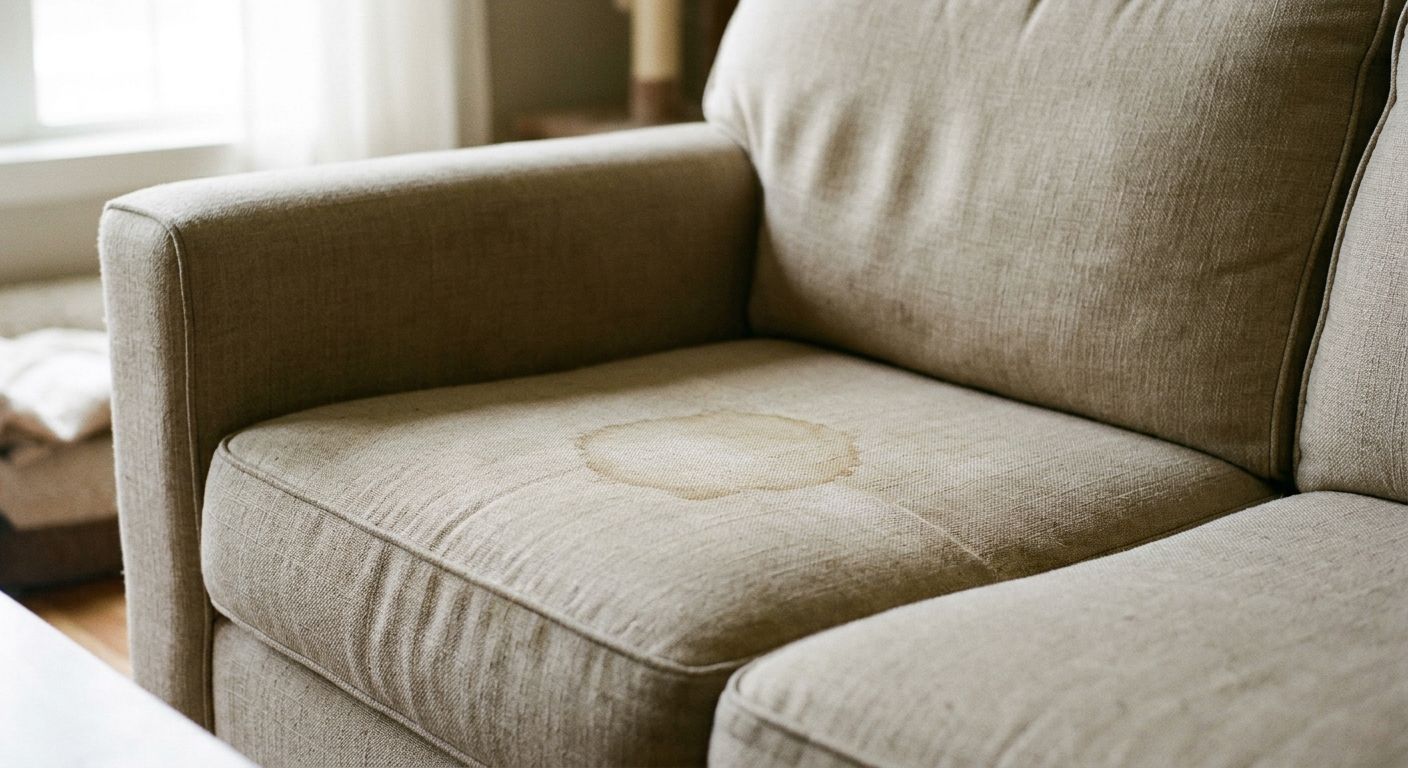
How Can You Identify the Type of Water Stain on Your Couch?
Water stains on upholstery can vary significantly in appearance. By closely examining the colour and shape, you can gain valuable insights into the nature of the stain and the likelihood of successful removal.
- A light or dark ring with a clear centre: This indicates that soil and residues have been pushed to the edge of the wet patch as it dried.
- A brown edge or halo: This occurs when the water interacts with the fabric fibres or drags colour and residues along with it, often seen in natural fibres and water-sensitive materials.
- A mark that reappears after cleaning: This suggests that moisture penetrated deep into the foam and brought soil back to the surface as it dried.
- A yellow or brown stain along the base of the couch: On lighter couches, a soaked frame can leach timber tannins into the fabric, making it very difficult to reverse.
- A dull or flattened patch on velvet: The pile of the velvet may dry flattened or in various directions, causing light to reflect differently.
Which Types of Fabric Couches Are Most Vulnerable to Water Stains?
The fabric type plays a crucial role in how a couch reacts to water. Many couches feature a cleaning code on a tag located under the cushion or on the frame, indicating whether water is suitable for cleaning. A code of W signifies that water-based cleaners are acceptable, S means solvent only, W-S indicates either option is suitable, and X means only vacuuming is permitted. For S or X fabrics, plain water may leave a watermark that could be difficult to remove with further applications of water. Our guide on understanding the W, S, W-S, and X tags on your lounge explains how to find the code and what each letter denotes.
Fabrics that are most susceptible to water marking include velvets, linens, viscose blends, and many designer fabrics commonly found on newer couches. Viscose weakens when wet and may distort, while linen can shrink and watermark easily. Velvet often contains viscose and is usually coded S, meaning a damp cloth can both leave a ring and crush the pile. If your couch is made of velvet, our article on how to clean a velvet sofa without crushing the pile offers detailed advice.
Is It Possible to Remove a Water Stain from a Couch?
Many water stains on fabric couches can be removed or significantly improved, but this is not guaranteed for all stains. The outcome depends on three primary factors: what the water has carried, the type of fabric and its cleaning code, and the cleaning methods that have already been attempted on the stain.
The soil that forms the ring remains embedded in the fibres. An effective clean that uniformly removes this soil across the entire panel and dries the fabric quickly can eliminate the outline of the stain.
Some stains prove more challenging to remove. If water has transported dye from the fabric, if timber tannins have bled through from the frame, or if the fibres have sustained damage, the stain may become permanent. Repeated attempts to clean at home can also reduce the chances of successful removal, as each round of scrubbing and re-wetting tends to spread the ring further and drive residues deeper into the fabric. For velvet, a professional low-moisture re-clean and controlled drying can often even out a water ring, but there are no guarantees once a ring has set. Before initiating the cleaning process, the technician inspects both the fabric and the stain, providing insights into the expected results.
What Steps Should You Take When Water Spills on Your Fabric Couch?
The first few moments following a spill are critical in determining whether it dries without a trace or leaves a water stain behind. Your primary objective should be to extract the water from the couch rather than attempting immediate cleaning.
- Quickly blot the area with a clean, dry, white cloth or towel. Press down, lift, and then move to a dry section of the cloth.
- Refrain from rubbing. Rubbing forces water deeper into the fabric’s weave and spreads the edge of the wet area.
- Consult the cleaning code before applying any additional products to the fabric.
- Do not detach cushion covers for separate washing, even if they have zips. Warwick Fabrics advises against removing covers for individual cleaning.
- Allow the area to dry in a shaded location, away from direct heat sources.
If a ring has already formed, avoid taking further action. Adding more water to a dried water stain typically enlarges the ring, and on S or X fabrics, this may result in a permanent mark. Warwick Fabrics also highlights that it is generally more effective to clean entire fabric panels rather than attempting to spot clean small areas, which can be difficult to do evenly at home without causing over-wetting.
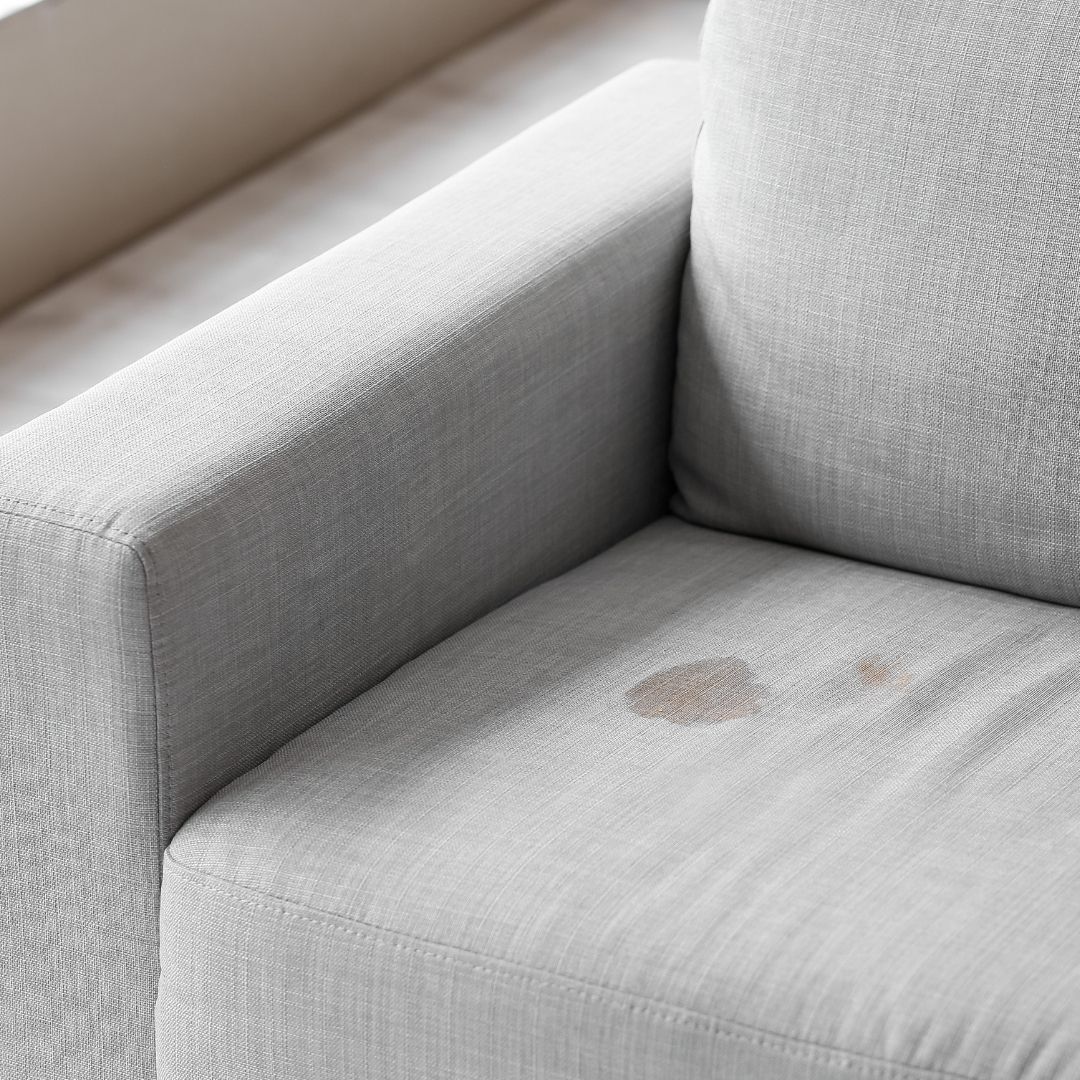
Why Do DIY Attempts Often Exacerbate Water Stains on a Couch?
Many individuals instinctively reach for a damp cloth and some detergent, scrubbing at the ring. This method introduces additional water, which can enlarge the stain. If detergent is not thoroughly rinsed out, it leaves a residue that attracts dirt, making the cleaned area appear darker than the surrounding fabric. Rental machines inject a considerable amount of water into the couch and lack control over the drying speed of the foam, resulting in wicking and undesirable odours.
Each additional attempt can limit options for professional cleaning because a stain treated with inappropriate products is often more difficult to lift evenly. We discuss common pitfalls in our article on why DIY spot cleaning frequently worsens stains. If the mark is a ring instead of a fresh spill, scheduling a professional clean early offers the best chance for a successful outcome.
How Does Wundaguard Effectively Eliminate Water Stains from Fabric Couches?
Wundaguard has been cleaning and protecting upholstery throughout Sydney since 1983. Our sofa cleaning process follows a systematic seven-step approach tailored to the fabric and the specific stain. Throughout the cleaning procedure, the technician carefully manages moisture levels and drying speed, ensuring that even drying prevents new rings from forming.
- Inspection of the fabric type, cleaning code, condition of the couch, and the water stain itself.
- A pre-vacuum to eliminate dry soil and dust from the surface and crevices.
- Pre-spotting of the stain and any other marks.
- An even pre-spray of cleaning solution across the entire panel to ensure comprehensive treatment.
- A deep clean using hot water extraction or a dry, low-moisture method, selected based on the fabric type.
- Spot treatment for any remaining stains.
- Deodorising to leave the couch smelling fresh.
Durable, colourfast fabrics typically undergo hot water extraction. Delicate fabrics, natural fibres, and those that should not be excessively wet are cleaned using a dry or low-moisture method. The criteria for choosing between the two methods are detailed in our guide on whether sofas should be steam cleaned or dry cleaned. Sofa and couch cleaning services start from $55 per seat, and further details can be found on our sofa cleaning Sydney page.
How to Prevent Future Water Stains on Your Couch
Applying fabric protection can provide an additional layer of defence. A protected fabric absorbs liquids more slowly, allowing spills to remain on the surface long enough to be blotted away before soaking into the foam. This is particularly essential for water-sensitive fabrics prone to marking. Wundaguard offers fabric protection starting from $44 per seat, which can be applied during the same visit as a sofa clean.
Protection must be complemented by proper care. Warwick Fabrics notes that fabric protectors do not eliminate the need for regular vacuuming, routine cleaning, or general upkeep. Quickly blotting spills, keeping wet towels and swimsuits off the cushions, and scheduling regular couch cleaning all contribute to reducing the risk of future water stains.
Frequently Asked Questions About Water Stains on Couches
Will a water stain on a couch eventually vanish on its own?
The ring consists of soil, residues, or dye that the water has moved to the edge of the wet area, and this material remains in the fibres until it is evenly cleaned out. Leaving the ring undisturbed is generally better than scrubbing it with additional water.
Are water stains on a fabric couch permanent?
Many water stains on fabric couches can be significantly improved or removed, especially if addressed promptly. Stains are more likely to become permanent if the water has transported dye, if timber tannins have bled from the frame, or if the fibres have been damaged due to repeated home cleaning attempts.
Why did a water stain appear after I cleaned my couch?
A mark that surfaces after cleaning is typically a result of wicking. Excess water has infiltrated the foam, and as it dries, it brings dissolved soil back to the surface. This indicates over-wetting rather than a failure to remove the stain.
Can you remove a water stain from a velvet or linen couch?
Velvet and linen require a low-moisture cleaning method and careful drying, as both are easily marked by water. Velvet also necessitates grooming of the pile during drying to prevent it from becoming crushed. A professional low-moisture re-clean and controlled drying can often even out a water ring on velvet, but it is not guaranteed once the ring has set.
How much does it cost to clean a water stain off a couch?
Wundaguard offers sofa and couch cleaning services priced per seat, starting from $55. The total cost depends on the size of the couch, the type of fabric, and its condition. Fabric protection can be added after the clean for a fee starting from $44 per seat. For a quote on your couch, please call 1300 360 824.
Book Your Professional Sofa Cleaning for Water Stains in Sydney
If you discover a water stain on your couch, promptly blot it dry, check the cleaning code, and avoid disturbing the ring until a professional can assess the fabric. Wundaguard provides cleaning services for fabric couches throughout Sydney, from Smeaton Grange and the Macarthur region to the inner suburbs. Inform us of the fabric type, the substance that was spilled, and any cleaning attempts made so far, and we will recommend the best cleaning method for your couch. Call 1300 360 824 or contact Wundaguard to schedule your appointment.
Original Article First Published At: Wundaguard’s Guide to Why Water Leaves a Stain on a Fabric Couch, and When It Will Come Out
The Article: Why Water Stains Fabric Couches: Wundaguard’s Insights first appeared on https://writebuff.com