
Last Updated on July 8, 2026 by David
Maintaining travertine floors can become increasingly complex when issues like surface voids, failing filler, calcium carbonate erosion, alkaline residue, sealer breakdown, and traffic wear come together. Professional restoration services can determine whether these problems arise from trapped contaminants, filler collapse, etched surfaces, worn top layers, or ineffective protective measures. They will then perform targeted cleaning, refining, filling, and sealing where the floor needs it most.
Why Comprehensive Care Strategies Are Essential for Dull, Damaged, and Uneven Travertine Floors
Maintaining travertine floors can become challenging when several issues arise simultaneously, such as dull traffic lanes, open holes, discolored grout, uneven coloration, loose filler, worn sealer, and varying shine. Homeowners usually notice these issues in high-traffic areas like kitchens, around sinks, near garden doors, and along main walkways.
Travertine, a calcium-carbonate stone formed through mineral spring deposition, features a natural pattern of voids and channels within the tile. While these holes enhance the stone’s unique appearance and are not necessarily a sign of failure, they do affect the methods used for cleaning, filling, polishing, and sealing.
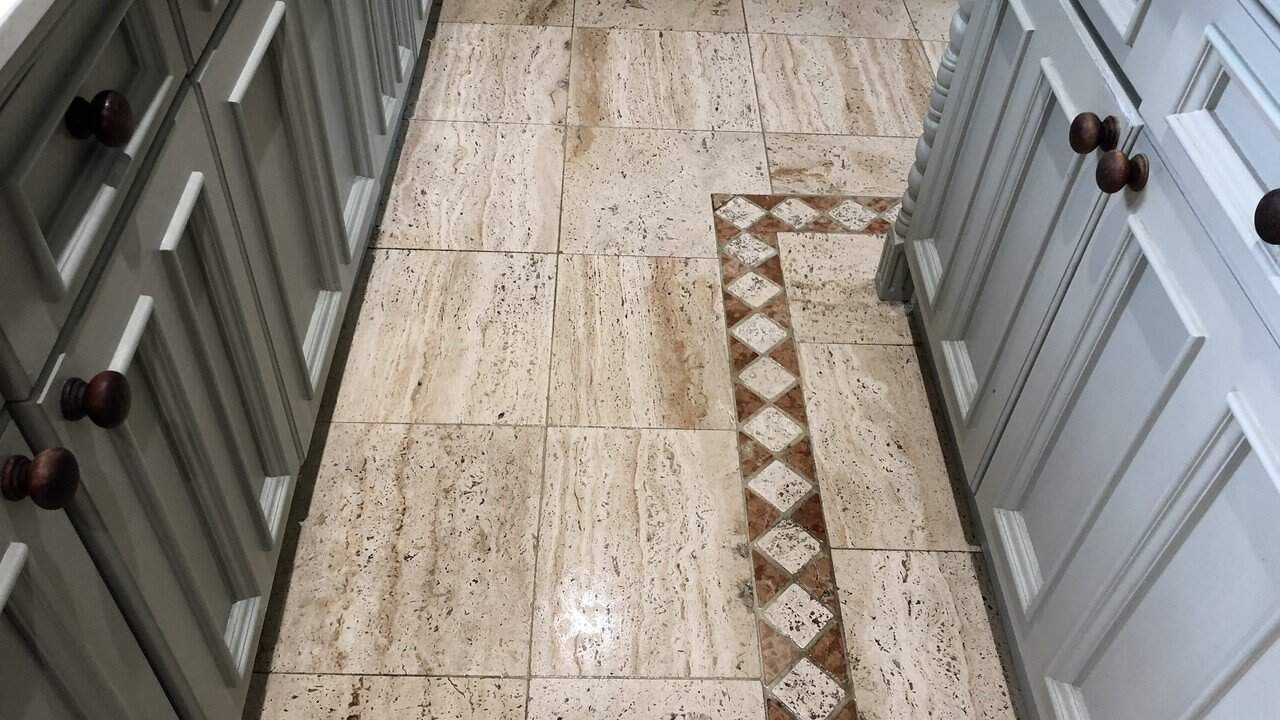
Recognizing symptoms becomes clearer when categorized by their implications. Dullness that appears more pronounced once dry typically indicates residue or sealer wear. Recurring holes usually suggest weaknesses in older filler. Patchy shine often highlights coating wear, while light etched marks typically indicate acid contact rather than dirt accumulation.
Decisions regarding cleaning, repair, polishing, and sealing are interconnected. Each floor may require different combinations of these services based on inspection results. It is crucial to differentiate whether the visible issue is caused by trapped soil, worn protection, unstable filler, surface abrasion, or chemical etching.
Understanding the Development of Holes, Open Patches, and Dirty Filler Lines in Worn Travertine Floors
Travertine features natural gas pockets formed through mineral-rich deposits, giving it a honeycomb structure and unique texture. The usable surface on a floor typically consists of a thin layer over this cavity zone, with denser calcite situated between the voids.
The cementitious filler used during production may weaken and dislodge over time in heavily trafficked areas, revealing pits that retain dirty mop water long after the surrounding stone remains intact. Newly formed holes often signify filler failure rather than a floor that is beyond repair.
Open voids absorb soil differently than the surrounding stone surface.
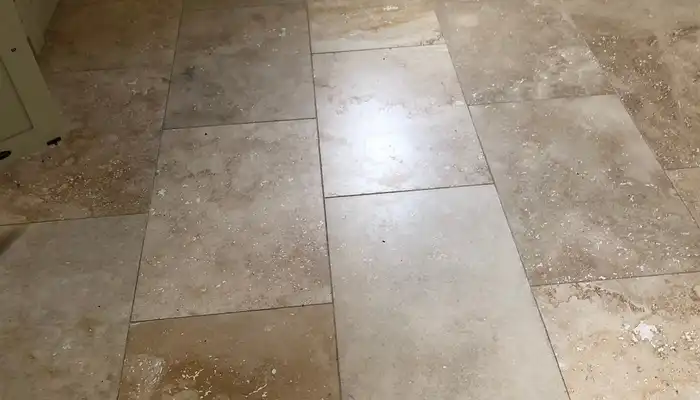
Professional extraction methods effectively remove contaminants from these low areas, rather than merely redistributing them across the surface with a mop. Selective, color-matched filling stabilizes loose or soil-retaining holes while preserving the stone’s natural character.
For detailed filling techniques, refer to our guide on travertine tile repair and filling small holes.
Investigating Why Worn Travertine Floors Exhibit Dullness, Shine, or Unevenness Across Different Areas
Honed, polished, tumbled, and traffic-worn travertine display diverse light reflection qualities, meaning a single floor can show multiple surface conditions simultaneously. A honed and filled floor typically presents a smooth satin finish while the stone, filler, and protective layers work together. When grit begins to scratch high-traffic areas, that satin finish can fade, allowing soil to build up in the worn texture.
Polished travertine can often be restored, but due to micro-voids and filler patches, it should not be equated with a uniform marble floor. Tumbled travertine, with its weathered, open texture, is designed to have a more rustic appearance, which means a fatigued tumbled floor generally requires cleaning, extraction, filling, and sealing instead of aggressive honing.
Diamond honing should only be considered when scratches or wear are too deep for straightforward cleaning to address. The best approach starts with the least invasive method that resolves the visible issue, as unnecessary cutting can expose cavities previously hidden beneath the surface layer.
For a practical example of polishing, see our case study on travertine polishing for dull worn floors.
Why Regular Mopping Fails to Eliminate Patchiness in Travertine Floors
Pits, failed filler lines, grout margins, and scratched traffic lanes can trap contamination beyond the reach of a mop. While loose soil can be cleared from the tile surface, dirty cleaning solutions can seep into low areas, especially when the water becomes dirty or no extraction process is used to remove suspended residues.
Grout also darkens similarly, and wear patterns reflect the home’s activity — areas around sinks, cooking zones, doorways, and walkways accumulate grit and undergo continuous traffic, causing scratched finishes that attract more soil than less-trafficked sections of the same floor.
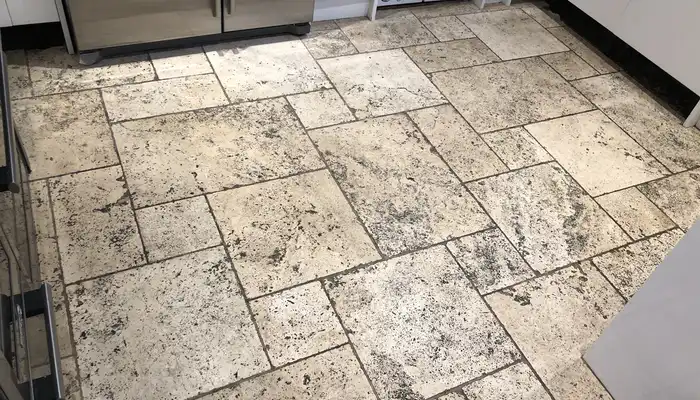
Professional hot water extraction significantly differs from domestic steam mops, as it promptly removes loosened contaminants. Using steam without extraction can soften coatings and push dirty moisture deeper into holes and worn filler.
For comprehensive cleaning guidance, refer to our article on cleaning travertine floors when standard methods fail.
Why Effective Cleaning of Travertine Floors Must Remove Embedded Soil Without Damaging the Stone
Stronger household chemicals are not the answer for a dull travertine floor. Being a calcium carbonate stone, travertine is vulnerable to etching from acidic products, which can result in pale marks and rough textures that cannot be easily rinsed away. Acidic descalers particularly fail to address limescale from the hard water prevalent in the UK.
A pH-neutral stone cleaner works well for routine maintenance but may not revive years of ingrained dirt or worn sealer. Professional alkaline cleaning techniques can effectively release greasy residues and older contaminants from void edges and grout, but thorough rinsing and extraction are equally critical. Alkaline residues that dry on the surface can undermine sealer performance and lead to the dull, quickly-soiling appearance many homeowners encounter after repeated cleaning.
This cycle of failure often begins when protective measures in high-traffic areas diminish, stronger cleaning products are used, rinsing is inadequate, and the floor becomes dull more rapidly. Professional restoration interrupts this cycle through controlled chemistry, extraction, neutralization, and resealing as needed.
For a detailed understanding of the risks associated with steam cleaning, see our article on the professional approach to steam cleaning travertine floors.
When Should Sealing Benefit a Worn Travertine Floor, and When Do Old Coatings Complicate the Situation?
Resealing can only be advantageous once the underlying surface issues have been properly identified. Sealing cannot fix dirty voids, loose filler, acid etching, or worn textures, so the floor must be cleaned and assessed beforehand.
Impregnating sealers operate beneath the surface, reducing liquid wetting while maintaining a natural appearance; they depend on clean, dry stone and meticulous rinsing beforehand. On the other hand, topical film sealers create a sacrificial layer that enhances the appearance of busy kitchen floors, appealing to homeowners seeking easier upkeep.
Peeling, cloudiness, sticky residues, or dark soils trapped beneath an old film do not represent general grime — they indicate a failed coating. Layering more sealer over such conditions usually worsens the issue rather than solving it. A water drop test can aid in diagnosis: rapid darkening suggests weakened protection, uneven wetting indicates lane wear, and persistent beading signifies active protection.
For guidance on removing failed coatings or selecting new protective measures, refer to our articles on safely removing old sealers from travertine and recommended travertine sealers for long-term protection.
Tailored Professional Care Strategies for Addressing Dullness, Cracks, Loose Filler, and Etched Marks in Travertine
A travertine floor can exhibit various issues at once, with each symptom indicating a different possible cause and requiring distinct guidance.
Why Resolving Dull Traffic Lanes Requires More Than Just Cleaning
Fine abrasions, residue buildup, and compromised sealer often combine to dull walkways and kitchen work zones. Etched patches and lost sheen typically call for a restoration or polishing evaluation instead of another round of household cleaning.
Assessing Cracks and Movement Lines Necessitates a Repair Evaluation First
Straight cracks or fractured tiles rarely respond to cleaning efforts; they typically indicate underlying bedding or movement issues. Stabilization and cosmetic filling require a repair-specific assessment before deciding on a broader restoration approach.
Addressing Open Holes and Loose Filler Turns Cleaning into a Repair Issue
Weak factory fill or previous unsuitable treatments can create holes that mopping only darkens further. Selective void stabilization is essential here, and detailed filling techniques are documented on the dedicated repair page linked from this hub.
Pale, Dull Splash Marks Usually Indicate Etching Rather Than Staining
Acidic spills or cleaning products that react with the calcium-carbonate surface result in pale, rough marks that cleaning cannot eliminate. This corrective route aligns with a restoration assessment rather than routine cleaning methods.
Explore these mixed-symptom repairs in action: travertine restoration in New Malden and restoration of a pitted travertine floor in Nantwich.
How Travertine Floors Transform Over Years of Use, Cleaning, and Resealing
A floor that once cleaned easily but now appears dull or patchy has probably changed beneath the surface. Traffic lanes become more pronounced, filler loosens, and protective sealers weaken until the previous cleaning routine fails to deliver satisfactory results.
Routine care should still begin with grit control before wet cleaning, using a pH-neutral cleaner, and managing residue carefully, as grit significantly contributes to fine scratching in worn areas. Filled zones and denser stone wear unevenly — older factory fillers may become matte, recessed, or loose while the surrounding tiles remain intact, often requiring selective repairs before resealing for a consistent appearance.
A restored floor should retain the look of natural stone rather than a plastic-like finish. The goal is to achieve clearer colors, revitalized grout, stable filler where needed, and a more uniform finish that honors the material’s essence.
When to Seek Professional Diagnosis for Travertine Floors Instead of Using Stronger Cleaning Products
Persistent darkening, recurring dirty patches, loose filler, etched marks, and inconsistent sealing typically indicate underlying wear, repair, or protective issues that standard household cleaning cannot address — the next step should be a proper diagnosis rather than applying stronger products.
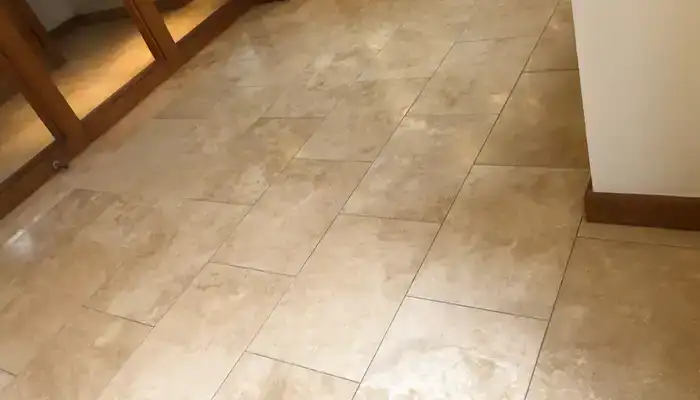
Interpreting the pattern is essential. Dullness that appears worse when dry suggests residue or abrasion, recessed filler points to void issues, pale marks indicate etching, and uneven shine reflects coating discrepancies. Professional assessments can distinguish these causes, preventing unnecessary honing and establishing realistic expectations before any work begins.
When done correctly, restoration provides significant visual improvement while preserving the natural voids and color variations that define travertine.
Essential Next Steps for Cleaning, Repairing, Sealing, Polishing, or Restoring Your Travertine Floor
Start with the most prominent symptom. Soil-related issues call for cleaning advice, open holes require repair guidance, patchy coatings need sealing or stripping instructions, and a dull worn finish may necessitate polishing or restoration strategies.
- Cleaning concerns: guidance on cleaning travertine floors when standard methods fail. Grout darkening: understanding why travertine grout discolors.
- Repair inquiries: travertine tile repair and hole filling. DIY restoration: can you restore a travertine floor yourself?.
- Sealing queries: long-term travertine sealers. Old coating removal: safely removing old sealers from travertine.
- Restoration examples: a travertine kitchen floor restoration in Richmond and a travertine floor restoration in Chippenham.
Abbey Floor Care conducts a thorough assessment of travertine before proceeding, as the material, finish, filler condition, previous sealing, and cleaning history influence the safest approach. The ultimate aim is to achieve a floor that appears clearer, is easier to maintain, and preserves the character that makes travertine a preferred choice.

David Allen — Abbey Floor Care
With over 30 years of experience working with travertine floors across the UK through Abbey Floor Care, David Allen’s expertise in material behavior, restoration processes, and long-term floor care informs every article published under the Abbey Floor Care name.
The article When Travertine Floors Need Professional Restoration Help was originally published on https://www.abbeyfloorcare.co.uk
The Article Travertine Floors: Expert Restoration Services Required appeared first on https://fabritec.org





No responses yet