Last Updated on June 28, 2026 by David
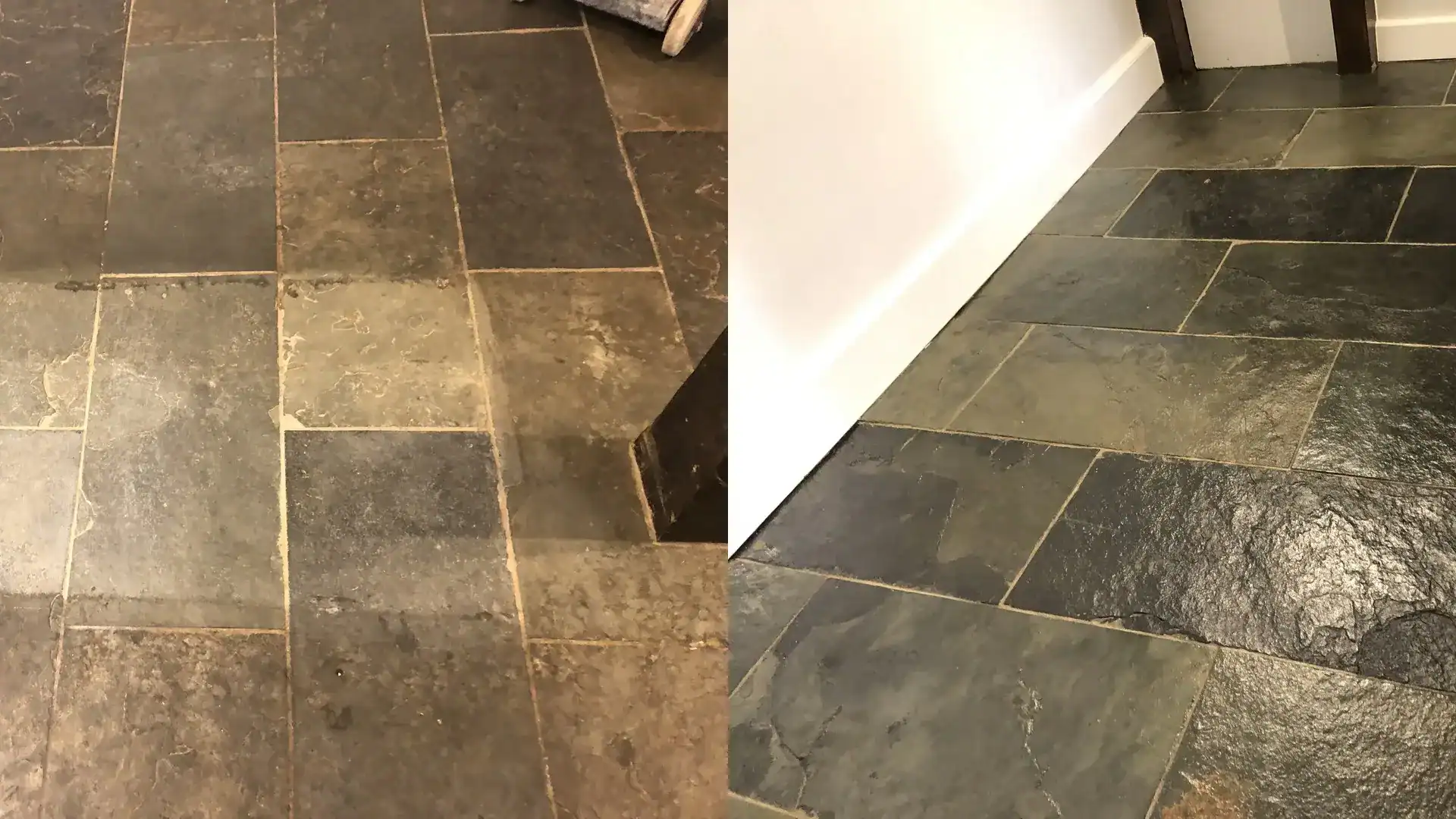
The slate restoration performed in this Wimbledon residence completely revitalized a 60 square metre kitchen, dining area, and entrance floor. The transformation shifted the surface from a heavily stained, lackluster appearance to a vibrant, deep green-black finish, highlighting enhanced grout lines and a pronounced wet-look shine.
What Factors Contribute to the Dulling of Slate Floors?
Initial Observations of Home Environment
If your slate floor looks dull even with regular cleaning, the root issue is often more practical than technical. The floor's neglect stands out, even if the rest of the room is tidy. This was the main visual issue within the kitchen, dining area, and entrance of this Wimbledon home.
The expansive slate floor, covering 60 square metres across interconnected spaces, made it impossible for the homeowner to overlook its condition or dismiss it as trivial. The kitchen, dining area, and entrance form a single visual corridor, allowing the worn appearance to impact the main living areas of the home.
The homeowner sought a comprehensive clean and restoration to return the floor to a like-new condition. The surface had lost the polished, refined appearance expected in a well-cared-for residential property. It not only looked aged; it appeared unfinished, weary, and beyond the reach of regular maintenance.
Widespread Dullness Across the Slate Surface
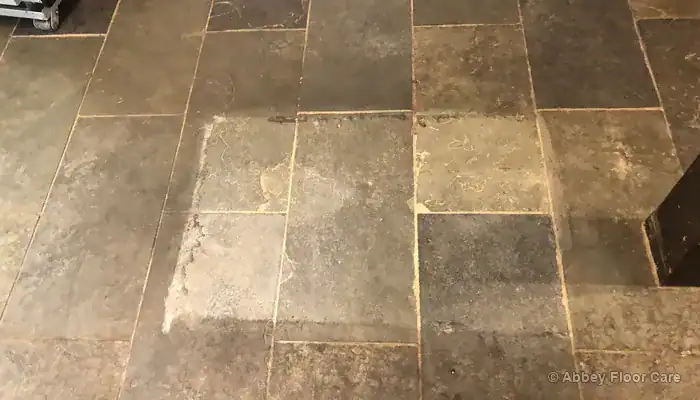
If your slate floor exhibits a flat grey hue throughout its main area, the room may feel darker and less inviting, even if the tiles remain structurally sound. This floor had a dull, flat appearance with minimal color depth, especially in the larger open spaces where light should have beautifully illuminated the stone.
The absence of vibrancy altered the slate's visual impact from a standing position. Instead of showcasing the attractive green-black color variations, the surface appeared muted and tired throughout the kitchen, dining, and entrance areas.
This was significant because slate should display natural variation and rich texture, rather than a flat, lifeless look. Readers experiencing similar issues can refer to the discussion on slate flooring that looks vibrant when wet but faded when dry, where the contrast between a tired, dry surface and a vibrantly restored finish becomes a crucial concern for homeowners.
Extensive Soiling on Tiles and Grout Lines
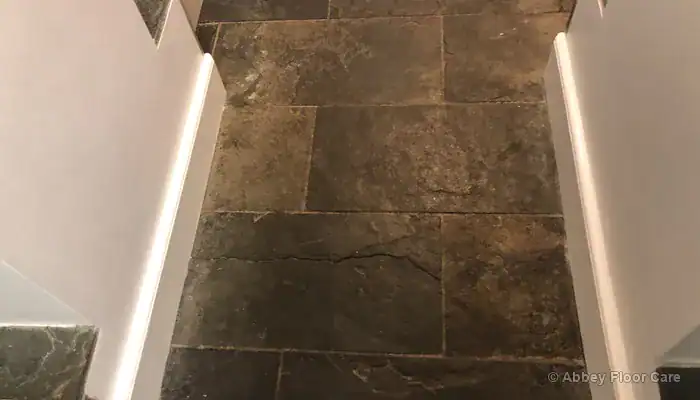
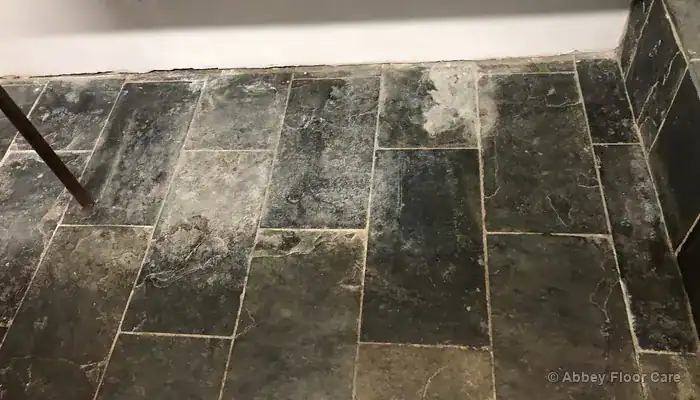
If your slate floor looks dirty again soon after cleaning, the most frustrating aspect is the realization that your efforts are yielding little to no results. The floor in Wimbledon exhibited heavy soiling across both tiles and grout, indicating that the issue affected the entire surface instead of being limited to a single spill or stain.
The floor appeared worn because both the tile surfaces and grout lines had lost their sharpness. The grout lines no longer clearly defined the separation between tiles, and the overall surface assumed a dull, used appearance that suggested a space in heavier use than it ought to be.
The entrance amplified the issue, as foot traffic naturally introduced grit and contaminants from outside. This pattern extended into the kitchen and dining areas, resulting in a slate floor that appeared consistently marked rather than selectively dirty.
The visible condition reflected the kinds of slate issues where ordinary cleaning fails to provide an even clean. A similar real-world example can be found in slate floor cleaning that fixed patchy color, where the homeowner faced not just soil but also the loss of a clean, cohesive surface.
White Chalky Residue and Inconsistent Patches
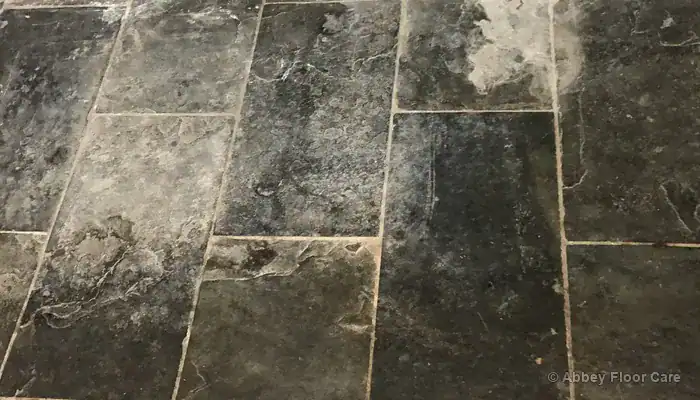
If your floor shows pale deposits on darker slate, the surface can remain patchy even after cleaning. This floor had white chalky deposits on the surface, resulting in an uneven and fractured appearance.
These chalky patches posed a problem as they disrupted the natural green-black hue of the slate. Instead of appearing as a cohesive surface, the floor drew attention to pale spots and tired edges, diminishing the overall aesthetic of the room.
The patchy appearance was particularly noticeable where darker tiles should have exhibited stronger depth. Black and green-black slate can look striking when properly finished; however, pale deposits and uneven tones quickly render the surface looking dusty, worn, and difficult to maintain.
The homeowner’s concerns were entirely valid. The floor required more than a basic clean; it had reached a stage where the visible finish no longer matched the standards expected in the surrounding home.
Damaged and Missing Grout Areas
If grout lines appear cracked, dirty, or incomplete, the entire slate floor can seem older than its actual age. Upon arrival, we found several areas of missing and damaged grout, which undermined the overall appearance of the kitchen, dining, and entrance floors.
The condition of the grout significantly impacted the visual integrity of the floor. Slate tiles rely on the joints to frame the surface cleanly, so damaged or absent sections made the installation appear worn, even when the individual tiles were still in good shape.
The homeowner needed the entire floor to look presentable across the full 60 square metres, not just in the more accessible areas. Localised grout damage complicated this, as broken lines tend to catch the eye quickly, particularly in kitchens and entrances where individuals naturally look down while walking.
The practical significance of the grout's condition is further explored in slate floor repair and replacement decisions, where damaged edges, joints, and localised failures inform the extent of restoration required. In this Wimbledon case, the visible issue was clear: the grout needed attention as part of the overall aesthetic recovery.
The Homeowner’s Restoration Objectives
If a slate floor no longer looks clean enough for the space, the goal extends beyond merely removing surface dirt. The homeowner aimed to restore the kitchen, dining, and entrance areas to a like-new condition since the floor no longer provided the clean, polished feel it should have contributed to the home.
The homeowner desired a richer, more uniform surface across the interconnected rooms. They did not want us to mask the natural character of the slate; instead, the aim was to reveal that character by eliminating the dull, dirty, and patchy presentation.
The project began with a straightforward, visible brief. The floor exhibited heavy soiling, worn grout, white deposits, dull color, and a lack of real depth. The homeowner requested that we address these issues throughout the entire 60 square metres.
This initial condition also makes the case study relevant for readers with similar floors in busy UK households. Kitchens, dining areas, and entrances experience constant foot traffic, and slate in such locations necessitates a finish that appears significantly improved after restoration and remains easier to maintain with proper ongoing care.
Why Traditional Cleaning Methods Were Ineffective in Enhancing the Dull and Soiled Surface
Dull slate that shows no improvement following mopping typically indicates that soil and residue are trapped where standard cleaning methods cannot effectively lift them. The riven texture of the surface retains grime in small low areas, while grout joints accumulate dirty water and traces of detergent as the mop passes over.
Standard mopping redistributes soil; restoration removes what the surface is holding.
Residue lock-in describes the visible condition where a floor appears clean when wet but dries to a cloudy or patchy look. The homeowner notices pale areas, tired grout, and inconsistent coloring; effective correction requires controlled cleaning, rinsing, and slurry extraction rather than repetitive domestic washing. Slate, being a fine-grained metamorphic rock that cleaves along natural planes, has a layered structure that inhibits mechanical polishing. This limits restoration to cleaning and sealing, making it sensitive to aggressive cleaning chemicals.
How the Slate Floor Was Cleaned and Restored Without Overworking the Material
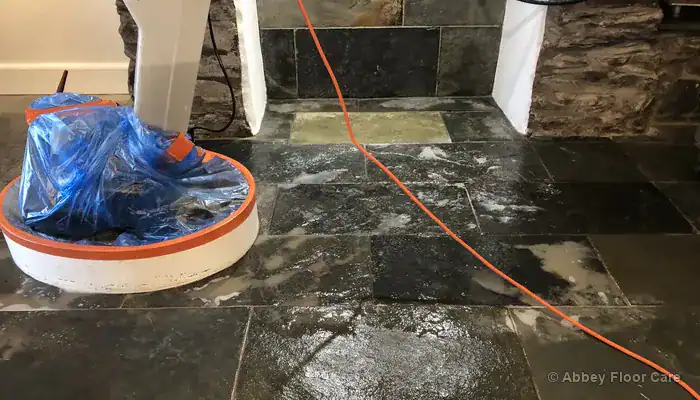
Scrubbing a worn slate floor too vigorously can remove dirt but leave the surface looking harsh and less natural. We first cleared the Wimbledon floor of dry surface soil, then applied LTP Grimex to loosen ingrained dirt and old residue from the tile surfaces and grout lines.
The cleaning phase involved rotary agitation, pressurized rinsing, and wet extraction to remove the dirty solution before it could settle back into the textured surface. After this, we allowed the floor to dry completely, ensuring that grout repairs and finishing decisions were based on the true dry appearance rather than a temporarily dark, wet surface.
For the finishing stage, we used Cee Tech urethane sealer to create a film-forming, color-enhancing surface that provided a wet-look shine. A finely honed slate floor features a smooth, consistent surface that diffuses light evenly, while an impregnating sealer preserves the natural riven texture, and a topical sealer adds a subtle surface sheen. The broader principles behind this controlled approach are explored in professional slate floor restoration techniques, and this project adhered to those same principles: sufficient cleaning power to restore appearance without overworking the stone.
What Notable Improvements Were Observed After Restoration?
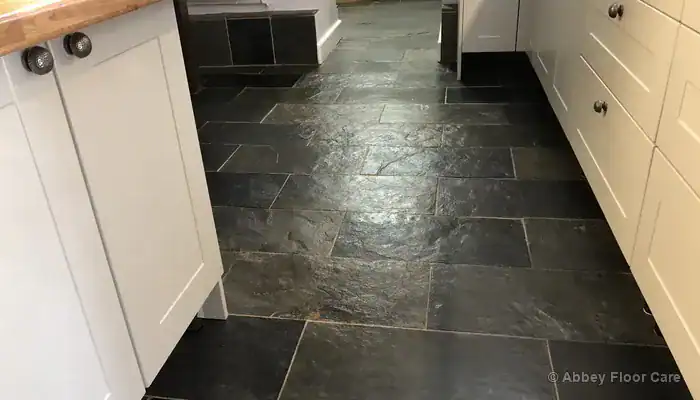
<a href="https://fabritec.org/victorian-tile-restoration-revives-a-stunning-floor/">Before restoration</a>, the 60 square metre slate floor appeared dull, heavily soiled, and visually flat across the kitchen, dining, and entrance areas. The grout lines looked worn, the surface displayed white chalky deposits, and the natural green-black depth of the tiles was obscured.
After cleaning, the floor regained clarity as the cleaning process eliminated heavy soil and residue from the tile surfaces and joints. The repaired grout provided the installation with cleaner definition, and the surface no longer looked as though normal household cleaning had failed.
Following finishing, the Cee Tech urethane sealer restored a strong wet-look shine and deeper green-black color throughout the interconnected rooms. The floor's appearance was significantly enhanced compared to before the intervention, and often, a correctly sealed slate floor can look superior to its original installation since the finish effectively activates the natural pigments.
Everyday maintenance also became easier, as a professionally restored and properly sealed floor is much simpler to clean and maintain than a worn or poorly treated surface. Correct ongoing care — including pH-neutral cleaning, grit removal before wet mopping, and resealing at appropriate intervals — is crucial for extending the floor’s lifespan, with practical routines detailed in how to clean slate floors when they remain dull.
Where to Find the Comprehensive Guide on Slate Floor Cleaning and Restoration
Readers interested in a more detailed explanation should transition from this Wimbledon case study to guidance that delves into cleaning limitations, sealer selections, and long-term care in greater detail. This project illustrates one completed floor, while the main guide elaborates on how different slate floors respond to soil, old coatings, texture, and sealing choices.
The broader guide is invaluable for homeowners assessing a dull floor, patchy surface, or tired wet-look finish in comparison to the results presented here. The foundational information is outlined in slate floor problems below the surface, while specifics on coating and preparation can be followed in cleaning slate before old sealer traps dirt. These resources provide the next layer of understanding without transforming this case study into a generic service page.

David Allen — Abbey Floor Care
David Allen brings over 30 years of experience working with slate and various floor surfaces through Abbey Floor Care. This Wimbledon case study showcases his hands-on approach to tackling heavy soiling, damaged grout, and diminished color depth on a genuine 60 square metre slate floor.
The article Slate Floor Restoration Wimbledon? When Cleaning Fails first appeared on https://www.abbeyfloorcare.co.uk
The article Slate Floor Restoration: What to Do When Cleaning Fails appeared first on https://fabritec.org




No responses yet