Master the Supertrend Indicator: Unlocking Its Core Principles
Key Parameters to Optimize Your Supertrend Settings

In mastering the supertrend indicator, understanding the two crucial parameters—period length and multiplier value—is essential. The period length determines how many historical data points contribute to the calculation of the average true range (ATR), which is vital for identifying trends. On the other hand, the multiplier modifies the ATR, establishing the distance of the supertrend line from the current price, thereby affecting the indicator’s overall sensitivity.
Selecting the right combination of these parameters is pivotal for successful trading outcomes. A shorter period length may provide more frequent signals, yet it can also introduce noise that complicates decision-making. Conversely, a longer period length smooths out fluctuations but may delay signal generation, making it less reactive to rapid market changes. Achieving an optimal balance between these extremes is essential for effective trading strategies and better performance.
Understanding how these components synergize empowers traders to make informed choices. By fine-tuning these settings, traders can personalize the supertrend indicator to match their unique trading styles—whether they prefer aggressive entry strategies that capitalize on quick movements or more conservative approaches that prioritize accuracy over frequency.
What Makes the Supertrend Indicator a Favorite Among Traders?
The supertrend indicator has gained popularity among traders for several compelling reasons. Its intuitive design provides clear buy and sell signals, making it accessible for both novices and experienced traders alike. Additionally, its versatility allows it to adapt seamlessly to changing market conditions, enhancing its effectiveness across various asset classes and timeframes.
Highlighted features of the supertrend indicator include:
- Unambiguous identification of trend directions
- Responsive flexibility to market volatility
- Clear visual representation on trading charts
- Broad compatibility with diverse trading strategies
These attributes significantly enhance its applicability in trading, enabling traders to make prompt decisions based on the signals produced by this powerful indicator.
The supertrend indicator excels in both trending and consolidating markets, effectively pinpointing optimal entry and exit points. This functionality supports traders in maneuvering through complex market dynamics with greater confidence and precision.
How to Effectively Select Initial Parameter Values for Supertrend
Selecting initial parameter values for the supertrend indicator necessitates a comprehensive assessment of current market conditions alongside personal trading objectives. Many traders start with foundational values such as a period of 10 and a multiplier of 3, as these provide a balanced approach to sensitivity and noise management. These baseline settings are crucial for establishing a reliable trading framework.
While having sensitivity to price changes is vital for trend identification, excessive sensitivity can lead to numerous false signals that may skew trading outcomes. On the other hand, overly conservative settings might result in missed opportunities that could have otherwise been profitable. Understanding the behavior of the market is critical when determining these essential initial settings.
Engaging in backtesting with various parameter combinations can assist traders in identifying which values yield the most beneficial outcomes within their specific trading contexts. This iterative process allows for a tailored approach, enhancing the supertrend indicator’s effectiveness in real-time trading scenarios.
What Is the Calculation Method Behind the Supertrend Indicator?

The calculation process for the supertrend indicator hinges on the average true range (ATR), which measures market volatility. The formula entails calculating the ATR over a specified timeframe and applying the multiplier to determine the distance of the supertrend line from the price. This calculation plays a vital role in defining the direction of the prevailing trend.
To calculate the ATR, one considers the highest high and lowest low over a designated period, offering a dependable measure of volatility. By adjusting the multiplier, traders can further refine the sensitivity of the supertrend line, enhancing its adaptability in varying market conditions.
Grasping this calculation method is essential for harnessing the supertrend indicator effectively. By understanding how the ATR interacts with price fluctuations, traders can make informed decisions regarding their entry and exit points, ensuring alignment with the market's prevailing direction and facilitating more profitable trades.
How Can Traders Detect Trend Reversals Using the Supertrend Indicator?
Traders can identify potential trend reversals by closely monitoring how price interacts with the supertrend line. When the price crosses above the supertrend line, it signals a potential bullish trend is emerging. Conversely, if the price falls below the line, it indicates a potential bearish reversal. This clear visual signal equips traders with the information needed to make timely adjustments to their positions.
Recognizing these crossover points is crucial for effective trading. Traders often use these signals as cues to either open new positions or exit existing ones, capitalizing on shifts in market sentiment. The straightforward nature of the supertrend indicator makes it accessible for traders of all experience levels to identify these critical reversals.
To strengthen confirmation of crossover signals, traders may also integrate additional indicators or consider the broader market context. Combining the supertrend indicator with other analytical tools enhances decision-making processes and increases the likelihood of executing successful trades.
How Do Supertrend Indicator Settings Affect Trading Decisions?
The Role of Parameters in Timing Entry Points
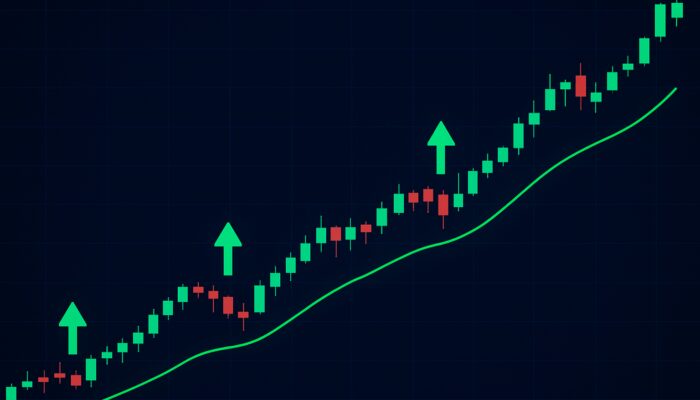
The configuration of the supertrend indicator has a significant impact on timing entry points for traders. Properly set parameters allow traders to synchronize their entries with confirmed trend shifts, thus minimizing the risk associated with entering trades during volatile or sideways market conditions. This precise alignment is crucial for maximizing profit potential.
When the supertrend indicator is accurately calibrated, it generates timely signals that help traders capitalize on emerging trends. In contrast, poorly calibrated parameters may lead to missed opportunities or premature entries, which can diminish profitability. Striking the right balance between sensitivity and reliability is essential for effective trading.
Traders often adjust their settings based on current market conditions or their own risk tolerance. This adaptability enhances their ability to time entries accurately, ensuring they are well-positioned as market trends evolve.
Importance of the Supertrend Indicator in Risk Management Strategies
The supertrend indicator is an invaluable tool for risk management, assisting traders in setting stop-loss levels that correspond to market volatility. Adjusting settings can either tighten or widen stop-loss distances, reflecting the calculations derived from the average true range. This adaptability is essential for safeguarding capital, especially during periods of heightened volatility.
Integrating the supertrend indicator into risk management strategies empowers traders to respond dynamically to fluctuating market conditions. For example, in highly volatile environments, traders might choose to widen their stop-loss placements to avoid being stopped out by normal price variations. Conversely, during calmer market conditions, tighter settings may be more appropriate.
Effective risk management is fundamental to achieving long-term trading success. Utilizing the supertrend indicator to guide stop-loss placements enables traders to maintain discipline and protect their investments, fostering a more sustainable approach to trading.
Expert Recommendations for Optimizing Supertrend Parameters
Optimizing parameters for the supertrend indicator entails a systematic approach that tests various multiplier values against historical price data. Traders can initiate this process by selecting a range of multiplier values and backtesting them across diverse market conditions to identify configurations that consistently yield reliable results.
A beneficial strategy is to conduct simulations that assess the performance of different settings over extensive datasets. This method offers insights into how specific parameters behave across multiple market cycles, allowing traders to refine their strategies based on empirical data.
Documenting findings and analyzing the performance outcomes of each configuration reveals which settings maintain consistency in their effectiveness. This thorough analysis aids in developing a robust trading strategy that can adapt to shifting market dynamics and improve overall trading performance.
Advanced Customization Techniques for Enhanced Indicator Reliability
Employing advanced customization techniques can significantly bolster the reliability of the supertrend indicator. Many seasoned traders choose to integrate the supertrend with additional technical indicators, such as volume filters or moving averages, to enhance signal accuracy and reduce lag during rapid market movements.
For instance, incorporating volume analysis can help confirm the strength of a trend indicated by the supertrend line. When a price movement corresponds with a notable uptick in volume, it may signify a more dependable trend. Similarly, utilizing moving averages can smooth out price fluctuations, offering additional context to the signals generated by the supertrend indicator.
These customization techniques empower traders to create a more comprehensive trading system that leverages the strengths of multiple indicators. By adopting this integrated approach, traders can refine their decision-making processes and enhance their overall trading performance.
Avoiding Common Mistakes in Supertrend Configuration
A common pitfall in configuring the supertrend indicator is over-optimization, which often leads to curve-fitting. This issue arises when traders excessively adjust their parameters to align too closely with historical data, resulting in suboptimal performance when applied to unfamiliar market conditions.
For example, a trader may meticulously fine-tune the multiplier and period length to achieve impressive win rates during backtesting, only to discover that these settings fail to deliver similar results in live trading scenarios. Such discrepancies frequently occur due to a lack of robustness in the selected parameters.
To mitigate these risks, traders should focus on establishing settings that perform effectively across diverse market conditions rather than solely optimizing for past performance. A balanced approach that takes into account historical data while considering potential future scenarios can lead to more sustainable trading outcomes.
How Parameter Adjustments Affect Trade Frequency and Profitability
Modifying the parameters of the supertrend indicator can greatly influence trade frequency and overall profitability. By altering the period length and multiplier factor, traders can adjust the number of signals generated, which subsequently impacts their trading activity and potential returns.
For instance, a shorter period may yield a higher frequency of signals, resulting in increased trade volume. However, this can also elevate transaction costs and the risk of encountering false signals. Conversely, a longer period may reduce the number of trades but could improve win rates due to fewer false signals being generated.
Ultimately, the relationship between parameter settings, trade frequency, and profitability is complex. Traders must carefully assess their trading objectives and market conditions to find the optimal balance that aligns with their strategies and risk tolerance for maximum effectiveness.
Expert Insights on Optimizing Supertrend Indicator Settings
What Are the Best Supertrend Indicator Settings for Different Market Types?
Tailoring to Asset Class Characteristics
The ideal supertrend indicator settings vary across different asset classes due to their unique volatility profiles and trading hours. For example, stocks may exhibit different price behaviors compared to forex or commodities, necessitating tailored settings for each market type.
In the stock market, traders might favor a longer period and a lower multiplier to accommodate the generally lower volatility observed. Conversely, in forex trading, where price movements can be more abrupt, shorter periods and higher multipliers may be necessary to effectively capture rapid trends.
Understanding the distinct characteristics of each asset class is critical for setting the supertrend indicator effectively. By customizing parameters to align with specific market dynamics, traders can enhance the accuracy of trend signals and improve their overall trading performance.
Finding the Optimal Balance Between Sensitivity and Reliability
Fine-tuning the period value of the supertrend indicator is crucial for achieving an effective balance between sensitivity and reliability. A shorter period may generate a higher frequency of signals, but it can also increase the risk of false breakouts. Conversely, a longer period may effectively filter out noise but could delay entry signals.
Traders should strive to find a middle ground that captures significant trend continuations while avoiding excessive whipsaws. Testing various period values through backtesting can help identify the optimal settings that align with individual trading styles and prevailing market conditions.
Additionally, continuously reviewing and adjusting these settings in light of current market analysis is essential. As market dynamics evolve, maintaining a balance between sensitivity and reliability ensures that the supertrend indicator remains a valuable asset for trend identification.
A Step-by-Step Approach to Backtesting Supertrend Settings
Backtesting is an essential process for traders looking to refine their supertrend indicator settings effectively. Traders should start by selecting a comprehensive dataset that encompasses a variety of market conditions over an extended timeframe. This data should include instances of both trending and consolidating markets for thorough testing.
Once the dataset is established, traders can implement their chosen supertrend settings and assess performance metrics such as win rates, average profit per trade, and maximum drawdown. By comparing various parameter combinations, traders can identify which settings yield the most favorable results.
After completing backtests, documenting findings and adjusting strategies accordingly is crucial. This iterative approach enables traders to continually enhance their settings and adapt to evolving market conditions, ultimately boosting their trading performance.
Evidence Supporting Enhanced Trade Outcomes
Research indicates that utilizing calibrated settings for the supertrend indicator can lead to improved profitability ratios when combined with disciplined position sizing strategies. Studies have shown that traders who optimize their parameters typically achieve higher win rates and enhanced overall performance metrics.
Calibrated settings help accurately capture trends while minimizing the potential for false signals. This level of accuracy aids traders in making informed decisions, allowing them to enter and exit positions with greater confidence. Aligning trading strategies with well-optimized parameters contributes to better overall results.
Incorporating disciplined risk management alongside optimized settings further enhances profitability. By maintaining a consistent approach to position sizing and stop-loss placements, traders can maximize returns while mitigating potential losses.
What Long-Term Advantages Come from Continuous Refinement?
Consistent application of optimized supertrend indicator settings fosters reliable compounding of returns over time. By frequently refining parameters based on market conditions, traders can align their strategies with evolving price dynamics, leading to improved performance across various trading cycles.
Long-term benefits include increased reliability in trend detection and reduced emotional decision-making during trading sessions. As traders become more familiar with their optimized settings, they can develop a deeper understanding of market behavior, resulting in more informed and strategic trading choices.
Ultimately, the ongoing refinement of supertrend settings plays a crucial role in a trader's overall success. By adapting to market changes and continuously enhancing their strategies, traders can achieve sustained growth and better align their trading activities with their long-term financial goals.
How Timeframe Differences Affect Supertrend Indicator Performance
Variations in timeframes significantly influence the effectiveness of the supertrend indicator. Traders need to carefully analyze how the indicator behaves across different timeframes to select optimal periods and multipliers that accurately capture genuine price movements.
For instance, shorter timeframes may require more sensitive settings to accommodate rapid price fluctuations, while longer timeframes could benefit from more conservative parameters that effectively filter out noise. Understanding the unique characteristics of each timeframe is essential for maximizing the indicator's reliability and performance.
By evaluating the supertrend indicator's performance across various timeframes, traders can discern which settings yield the best results for their specific trading strategies. This comprehensive evaluation allows for a more tailored approach that enhances overall trend detection reliability.
How to Adjust for Market Volatility Levels
Market volatility levels have a profound impact on the performance of the supertrend indicator. Assets characterized by high volatility generally require larger multiplier values to eliminate minor fluctuations, while lower volatility instruments benefit from tighter parameter settings that can promptly detect subtle trend shifts.
Traders should assess the current volatility of the assets they are trading to establish appropriate settings. By adjusting the multiplier according to prevailing market conditions, traders can enhance the accuracy of the supertrend indicator and improve their odds of executing successful trades.
Regularly monitoring market volatility and adapting settings accordingly is vital for maintaining the indicator's effectiveness. This proactive strategy ensures that traders remain responsive to evolving market dynamics, ultimately enhancing their trading outcomes.
Research-Driven Advantages of Optimizing Supertrend Indicator Settings
Why Is It Crucial for Traders to Regularly Update Supertrend Indicator Settings?
Adapting to Changing Volatility Conditions
Regularly recalibrating the supertrend indicator settings is essential for ensuring its responsiveness to shifts in market behavior. As volatility levels change, adjusting the parameters ensures that the indicator continues to deliver accurate signals without producing excessive noise or delayed reactions.
Traders who neglect to make these adjustments may find that the indicator becomes less effective over time. By routinely reviewing and fine-tuning their parameters, traders can maintain alignment with prevailing market conditions, thereby enhancing their overall trading performance.
This proactive approach not only increases signal quality but also helps traders adapt more effectively to changing market dynamics. By responding to fluctuations in volatility, traders can maintain a competitive edge and make more informed trading decisions.
Ensuring Consistent Performance in Various Market Cycles
Regularly evaluating supertrend indicator settings helps preserve a trader's advantage as underlying price dynamics shift. Markets are inherently dynamic, and strategies that perform well during one cycle may not yield the same results in another. By consistently assessing and adjusting settings, traders can adapt to new patterns and trends as they emerge.
This adaptability is vital for achieving long-term success in trading. Traders who maintain a disciplined approach to refining their settings are better equipped to navigate shifting market conditions, ultimately leading to enhanced performance and greater profitability.
Incorporating routine performance evaluations into the trading regimen allows for timely adjustments that keep strategies aligned with current market realities. This ongoing process is crucial for sustaining a competitive advantage in the financial markets over time.
Seamless Integration with Trading Platforms
Most modern trading platforms provide users with the ability to input custom values for the supertrend indicator, facilitating seamless implementation during live trading sessions. This integration allows traders to quickly and efficiently apply their optimized settings, thus enhancing their overall trading experience.
By leveraging the features of their chosen trading platforms, traders can easily adjust their supertrend settings as necessary, ensuring they remain responsive to market fluctuations. This flexibility is essential for maintaining accuracy and effectiveness in detecting trends.
Many platforms also offer additional tools and resources for analyzing the performance of the supertrend indicator. Utilizing these features allows traders to gain deeper insights into their strategies while making data-driven adjustments to improve their overall trading outcomes.
Establishing a Monitoring and Adjustment Framework
Consistent observation of signal quality is crucial for maintaining the effectiveness of the supertrend indicator. Traders should implement a monitoring process that includes regular assessments of the indicator’s performance, enabling timely adjustments that keep the system aligned with current market conditions.
Key monitoring checkpoints may encompass:
- Evaluating signal accuracy and reliability
- Analyzing trade outcomes and win rates
- Reviewing market volatility and its influence on settings
- Adjusting parameters in response to changing market dynamics
By establishing a structured monitoring approach, traders can ensure their supertrend settings remain effective and relevant. This proactive strategy enhances decision-making capabilities and contributes to overall trading success.
What Results Can Traders Expect After Properly Configuring the Supertrend Indicator?
Properly executed configurations of the supertrend indicator typically facilitate clearer trend identification and diminish emotional decision-making during active trading periods. Traders who dedicate time to optimizing their settings can anticipate improved signal accuracy, resulting in more confident trading decisions.
With optimized settings, traders are better positioned to capitalize on emerging trends while minimizing the risk of false signals. This clarity in trend identification enhances overall trading performance, leading to more strategic entry and exit points in the market.
Ultimately, traders can expect that well-configured supertrend indicator settings will support their trading objectives, boost profitability, and promote a more disciplined approach to engaging with the financial markets.
Implementing Supertrend Indicator Settings Effectively
FAQs About the Supertrend Indicator
What is the supertrend indicator?
The supertrend indicator is a technical analysis tool designed to help traders identify the prevailing trend direction in financial markets. It produces clear buy and sell signals based on price movements relative to a calculated trend line.
How do I effectively configure the supertrend indicator?
To configure the supertrend indicator effectively, choose an appropriate period length and multiplier based on your trading style and the current market conditions. Common starting values include a period of 10 and a multiplier of 3, which can be modified based on the results of your backtesting.
Why is optimizing parameters critical for trading success?
Optimizing parameters is essential because it allows traders to customize the supertrend indicator to align with specific market conditions. This optimization enhances signal accuracy and reduces the likelihood of false signals, ultimately leading to improved trading performance.
How often should I revisit and adjust my supertrend settings?
Traders should periodically review and modify their supertrend settings, especially in response to shifting market volatility and price dynamics. Regular adjustments are vital to preserve the indicator's effectiveness and responsiveness to market changes.
Can the supertrend indicator be utilized across all asset classes?
Yes, the supertrend indicator is versatile and can be applied to various asset classes, including stocks, forex, and commodities. However, optimal settings may vary based on the specific characteristics and volatility of each asset class.
What mistakes should I avoid when using the supertrend indicator?
Common mistakes include over-optimization of parameters, neglecting to adjust settings for changing market conditions, and relying solely on the supertrend indicator without incorporating other technical analysis tools to confirm signals.
How does market volatility impact supertrend settings?
Market volatility significantly influences supertrend settings by guiding the selection of multiplier values. Higher volatility may require larger multipliers to filter out minor fluctuations, while lower volatility allows for tighter settings to capture subtle trend shifts.
What is the most suitable timeframe for using the supertrend indicator?
The best timeframe for utilizing the supertrend indicator varies depending on individual trading strategies and preferences. Shorter timeframes may necessitate more sensitive settings, while longer timeframes might benefit from more conservative parameters.
Is it feasible to combine the supertrend indicator with other indicators?
Yes, integrating the supertrend indicator with other technical analysis tools, such as moving averages or volume analysis, can enhance the reliability of signals and improve overall trading performance.
What outcomes can I expect from effectively using the supertrend indicator?
When applied proficiently, the supertrend indicator can provide clearer trend identification, facilitate better entry and exit points, and reduce emotional decision-making, all of which contribute to overall trading success.




No responses yet