Master the Ichimoku Cloud Trading System for Enhanced Market Analysis
What Are the Essential Elements of the Ichimoku Cloud Structure?

The Ichimoku Cloud is an advanced trading indicator specifically designed to analyze market trends, assess momentum, and identify key support and resistance levels. Its complex structure consists of five integral lines that together create a comprehensive visual depiction of price movements over time. Each line serves a unique purpose, allowing traders to evaluate market behavior from various perspectives. The main components of the Ichimoku Cloud system include:
- Tenkan-sen (Conversion Line): This short-term moving average reacts quickly to price changes, effectively signaling the immediate trend direction.
- Kijun-sen (Base Line): Serving as a longer-term average, it provides valuable insights into the strength and direction of the trend.
- Senkou Span A and B (Leading Spans): These lines form the cloud itself, projecting future support and resistance levels ahead of time.
- Chikou Span (Lagging Span): This indicator reflects the current price 26 periods back, offering insights into how past price action relates to the current market situation.
When these elements are combined, they offer traders a powerful visual toolkit that aids in making informed decisions. By understanding the interactions among these lines, traders can evaluate market trends more effectively, significantly improving their trading decisions.
How Has the Ichimoku Cloud Developed Over the Years?
The Ichimoku Cloud originated in the late 1930s, created by Goichi Hosoda, a Japanese journalist. Initially aimed at stock market analysis, its principles have proven versatile and effective across various asset classes, including cryptocurrency trading. The enduring relevance of this system lies in its comprehensive approach to visualizing market trends, which surpasses conventional methods by integrating multiple indicators into a unified framework.
In today's trading landscape, the Ichimoku Cloud is utilized by traders worldwide for analyzing market dynamics and identifying potential entry and exit points. Its ability to adapt to different market conditions has made it an essential tool for both novice and experienced traders alike. This evolution highlights its effectiveness in recognizing market momentum, as well as support and resistance levels, making the Ichimoku Cloud applicable across different asset types and trading environments.
What Are the Most Effective Practices for Implementing the Ichimoku Cloud in Trading Strategies?
Integrating the Ichimoku Cloud into trading strategies can significantly enhance traders' decision-making and overall efficiency. Traders can begin by utilizing the various components to accurately identify market trends. For instance, a bullish trend is indicated when the Tenkan-sen crosses above the Kijun-sen, while a downward crossover reflects a bearish trend.
Essential methods for effectively incorporating the Ichimoku Cloud into trading strategies include:
- Trend Following: Use the cloud to identify prevailing trends and execute trades that align with the trend direction—enter above the cloud for bullish trades and below for bearish trades.
- Identifying Support and Resistance Zones: The leading spans of the cloud help traders locate potential support and resistance zones, aiding in strategic entry and exit decisions.
- Signal Confirmation: Utilize the Chikou Span to validate signals generated by the other lines; if the current price is above the Chikou Span, it reinforces a bullish signal.
- Multi-Time Frame Analysis: Apply the Ichimoku Cloud across various time frames to gain a holistic view of market trends and identify high-probability trading setups.
By mastering these integration techniques, traders can maximize the benefits of the Ichimoku Cloud, leading to improved trading performance and more effective risk management practices.
What Are the Key Signals Generated by the Ichimoku Cloud?

The Ichimoku Cloud generates several critical signals that traders can interpret for actionable insights. A key indicator is the crossover between the Tenkan-sen and Kijun-sen, which can signal a change in market momentum. A crossover where the Tenkan-sen rises above the Kijun-sen generates a bullish signal, while the reverse indicates bearish sentiment.
Additionally, changes in the cloud's color provide significant insights: when Senkou Span A is positioned above Senkou Span B, the cloud appears green, indicating a bullish sentiment. Conversely, a red cloud signifies bearish conditions. These visual indicators allow traders to quickly assess market sentiment and adjust their strategies accordingly.
Other notable signals include:
- Price Position Relative to the Cloud: If the price is above the cloud, it suggests a bullish trend; conversely, being below indicates bearish conditions.
- Chikou Span Analysis: When the Chikou Span is above the price, it confirms bullish momentum, while being below suggests bearish trends.
- Cloud Thickness: A thick cloud indicates strong support or resistance, whereas a thin cloud may signal volatility or potential trend weakness.
- Leading Span Crossovers: A crossover where Senkou Span A surpasses Senkou Span B may indicate a bullish trend change, and vice versa.
Understanding these signals and their implications empowers traders to make informed decisions in the fast-paced world of cryptocurrency trading, thereby enhancing their overall effectiveness.
What Are the Core Elements of the Ichimoku Cloud Trading System?
How Do the Lines Within the Ichimoku Cloud Operate?
The lines that make up the Ichimoku Cloud serve distinct functions, each playing a vital role in creating a robust trading analysis framework. The Tenkan-sen (Conversion Line) and Kijun-sen (Base Line) are essential for identifying both short-term and long-term trends, respectively. When these lines cross, they generate signals that may indicate potential trend reversals or continuations.
For example, if the Tenkan-sen crosses above the Kijun-sen, it suggests a possible bullish trend, prompting traders to consider entering long positions. Conversely, a crossover in the opposite direction signals potential bearish momentum, advising traders to close long positions or initiate short trades. Additionally, the interaction of these lines with the cloud can reinforce signals; for instance, a bullish crossover occurring above the cloud further strengthens the bullish signal.
Furthermore, Senkou Span A and B create the visual aspect of the cloud, projecting future support and resistance levels. The distance between these spans can indicate market volatility; a wider cloud often hints at stronger support or resistance, while a narrower cloud may signal impending price action and potential breakouts.
Lastly, the Chikou Span functions as a confirming indicator, comparing current prices against historical data. By positioning itself relative to the price and the cloud, it helps traders validate the strength of a trend, providing additional confirmation to signals generated by the other lines.
What Visualization Techniques Improve the Effectiveness of the Ichimoku Cloud?
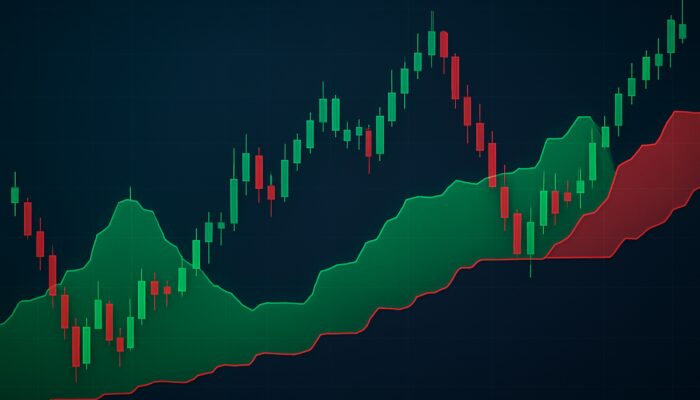
The Ichimoku Cloud employs unique visualization techniques that significantly enhance traders' ability to interpret data effectively. Its layered structure clearly distinguishes between bullish and bearish conditions, enabling quick assessments of market sentiment. The cloud, formed by Senkou Span A and B, provides a powerful visual representation of projected support and resistance levels.
Traders often use color-coding to deepen their understanding of market dynamics. When Senkou Span A is above Senkou Span B, the cloud appears green, implying a bullish outlook, while a red cloud indicates a bearish scenario. This immediate visual cue enables traders to make swift decisions based on prevailing market conditions.
In addition to color coding, traders leverage the cloud's thickness and depth as indicators of support and resistance strength. A thicker cloud signifies robust support or resistance, whereas a thinner cloud may indicate potential volatility or forthcoming price movements. This strategy aids traders in anticipating possible market shifts and adjusting their strategies accordingly.
Moreover, traders can utilize various charting platforms that allow for customized visuals, such as setting alerts for specific crossovers or cloud color changes. Such enhancements are crucial for developing a responsive trading strategy capable of quickly adapting to rapidly changing market conditions.
What Key Considerations Should Traders Keep in Mind When Setting Up the Ichimoku Cloud?
Effectively setting up the Ichimoku Cloud requires careful consideration of multiple factors to ensure accurate readings. One of the primary aspects to evaluate is the choice of time frame. Depending on individual trading styles—whether scalping, day trading, or long-term investing—traders should select appropriate time frames that align with their strategies.
Another crucial factor involves adjusting the cloud's default settings. While the traditional Ichimoku Cloud employs a 9, 26, and 52 period configuration, customizing these settings based on specific market conditions or trading styles may prove beneficial. For example, shorter periods may be more suitable for volatile assets like cryptocurrencies, while longer periods may offer better insights for more stable securities.
Additionally, traders must account for the overall market context when interpreting Ichimoku signals. For instance, during news events or significant market shifts, traditional signals may lose reliability. Understanding the broader economic landscape can help traders contextualize their Ichimoku analysis for more accurate decision-making.
Finally, integrating effective risk management techniques into the Ichimoku setup is essential. This includes establishing stop-loss orders based on critical levels identified by the cloud, which allows traders to protect their capital while still capitalizing on potential trading opportunities.
What Role Does the Chikou Span Play in Signal Validation?
The Chikou Span, or lagging span, is crucial in confirming the signals generated by the other components of the Ichimoku Cloud. This unique indicator plots current price data 26 periods back, offering traders a historical perspective that can be leveraged for trend validation.
By comparing the Chikou Span with current price action, traders can gain insights into market momentum. If the Chikou Span is above the price, it confirms bullish momentum, suggesting that the price has maintained higher levels over time. Conversely, if the Chikou Span is below the price, it indicates bearish momentum, reinforcing the idea that the current downtrend is supported by historical price action.
Moreover, the Chikou Span's position relative to the cloud further enhances its confirmation role. If the Chikou Span is above the cloud, it adds additional validation to bullish signals generated by crossovers or cloud color changes. Conversely, if it is positioned below the cloud, it may negate bullish signals and reinforce bearish market sentiment.
Traders effectively incorporate the Chikou Span into their analysis as a secondary confirmation tool, enabling them to refine their entry and exit strategies. This ensures they are trading in alignment with prevailing market trends rather than reacting impulsively to short-term volatility.
How Can Traders Combine the Ichimoku Cloud with Other Indicators for Better Results?
Integrating the Ichimoku Cloud with other technical indicators significantly enhances trading strategies by providing a more comprehensive view of market conditions. Combining the Ichimoku Cloud with tools such as the Relative Strength Index (RSI) or Moving Averages can substantially improve the accuracy of trading signals.
For example, using RSI in conjunction with the Ichimoku Cloud allows traders to gain insights into overbought or oversold conditions. If the RSI indicates overbought conditions while the price is above the cloud, traders may need to exercise caution, as a potential trend reversal could be imminent. Conversely, if the RSI shows oversold conditions while the price is below the cloud, it could signal a buying opportunity.
Another effective combination involves utilizing the Moving Average Convergence Divergence (MACD) alongside the Ichimoku Cloud. The MACD's crossovers can serve as additional entry or exit signals. If the MACD crosses above the zero line while the price is above the cloud, it confirms a bullish outlook. Conversely, if it crosses below while the price is below the cloud, it reinforces bearish sentiment.
Moreover, traders can employ volume indicators alongside the Ichimoku Cloud to validate breakouts. A breakout from the cloud accompanied by significant volume can provide strong confirmation of a new trend, leading to more robust trading decisions.
By effectively integrating the Ichimoku Cloud with other indicators, traders can formulate a multi-faceted approach that minimizes the risk of false signals and enhances overall trading performance in dynamic market conditions.
Expert Insights on Utilizing the Ichimoku Cloud for Cryptocurrency Trading
What Advanced Techniques Can Enhance the Use of the Ichimoku Cloud?
Advanced analysis techniques that leverage the Ichimoku Cloud provide traders with a deeper insight into market dynamics, allowing for a nuanced understanding of price movements. One such technique involves conducting multi-time frame analysis to identify confluence zones, where signals from different time frames align. This method aids traders in pinpointing high-probability trading setups.
For example, if a trader observes a bullish crossover on a 1-hour chart while the daily chart remains bullish, this alignment strengthens the decision to enter a long position. This multi-time frame analysis empowers traders to align short-term trades with long-term trends, thus enhancing the likelihood of successful trades.
Another advanced technique is integrating Fibonacci retracement levels with the Ichimoku Cloud. By identifying key Fibonacci levels in the context of the cloud, traders can pinpoint potential reversal zones coinciding with Ichimoku signals. For instance, if a bullish reversal occurs at a Fibonacci level while the price is above the cloud, it further supports the case for a long position.
Additionally, traders can apply price action analysis alongside the Ichimoku Cloud. Observing candlestick patterns, such as pin bars or engulfing patterns, in conjunction with Ichimoku signals can provide further validation for trade decisions. A bullish engulfing pattern occurring above the cloud may indicate a strong buying opportunity, supported by the Ichimoku framework.
Utilizing these advanced analysis techniques allows traders to refine their strategies, adapt to changing market conditions, and enhance their overall trading effectiveness.
What Advantages Come from a Refined Application of the Ichimoku Cloud?
Refining the application of the Ichimoku Cloud offers traders numerous benefits that significantly enhance their trading strategies. One primary advantage is improved accuracy in identifying market trends. By customizing the Ichimoku settings to suit specific assets or time frames, traders can tailor their analysis to capture more precise signals that align with current market conditions.
Additionally, a refined approach enables traders to develop a deeper understanding of support and resistance levels. The cloud's leading spans provide dynamic support and resistance zones that adapt to changing price action. By closely monitoring these zones and incorporating them into their trade plans, traders can make informed decisions regarding entries, exits, and risk management.
Another benefit of adopting a refined strategy is increased confidence in trading decisions. By developing a comprehensive understanding of how the Ichimoku Cloud functions within various market contexts, traders can minimize emotional reactions to market fluctuations. This psychological edge facilitates more disciplined trading, reducing the likelihood of impulsive decisions driven by fear or greed.
Moreover, a refined application of the Ichimoku Cloud promotes better risk management practices. By identifying key levels of support and resistance, traders can establish well-defined stop-loss and take-profit levels, protecting their capital while maximizing potential gains. This disciplined approach to risk management is crucial in the volatile world of cryptocurrency trading.
Overall, the benefits of a refined approach to the Ichimoku Cloud not only enhance trading accuracy but also promote a more structured and disciplined trading strategy that aligns with the dynamic nature of the cryptocurrency market.
What Challenges Should Traders Anticipate When Using the Ichimoku Cloud?
Implementing the Ichimoku Cloud in trading strategies does present several challenges. One primary obstacle traders encounter is the complexity of its components. The multiple lines and signals can overwhelm beginners, leading to potential misinterpretations of market conditions. To overcome this challenge, traders should focus on gradual learning, starting with a fundamental understanding of each component before progressing to more advanced applications.
Another challenge is the potential for false signals, particularly in volatile markets like cryptocurrencies. The Ichimoku Cloud can produce rapid signals that may not always reflect the underlying market sentiment. To mitigate this issue, traders should utilize additional confirmation tools, such as volume indicators or oscillators, to validate the signals generated by the Ichimoku Cloud.
Market anomalies, such as sudden news events or extreme volatility, can also impact the effectiveness of the Ichimoku Cloud. During such times, traditional signals may become less reliable, causing traders to question their strategies. Staying informed about market news and adapting strategies accordingly can assist traders in navigating these unpredictable scenarios.
Lastly, maintaining discipline while trading with the Ichimoku Cloud requires a solid psychological framework. Emotional trading can lead to impulsive decisions, especially when signals conflict with trader expectations. Developing a robust trading plan that incorporates risk management rules and clear entry and exit strategies can help traders remain disciplined and focused.
By proactively addressing these challenges, traders can enhance their utilization of the Ichimoku Cloud, leading to improved trading outcomes in the competitive cryptocurrency market.
What Case Studies Demonstrate the Effectiveness of the Ichimoku Cloud in Crypto Trading?
Examining real-world case studies where the Ichimoku Cloud has proven effective in cryptocurrency trading offers valuable insights into its practical application. One notable example is the analysis of Bitcoin's price movements during a bullish market phase in 2020. As Bitcoin broke through the $10,000 resistance level, the Ichimoku Cloud provided clear signals for entering long positions.
During this period, the Tenkan-sen crossed above the Kijun-sen, indicating a bullish trend. Additionally, the price remained above the cloud, reinforcing the bullish outlook. Traders who adhered to these signals and implemented appropriate risk management strategies were able to capitalize on substantial price gains, underscoring the effectiveness of the Ichimoku Cloud in identifying upward momentum.
Conversely, a case study of Bitcoin's price action in early 2018 illustrates the Ichimoku Cloud's utility in spotting potential downturns. As the price approached the cloud, the Tenkan-sen began to cross below the Kijun-sen, signaling a bearish trend. The subsequent drop below the cloud further confirmed the bearish sentiment, allowing traders to exit long positions or initiate short trades. This example showcases how the Ichimoku Cloud can effectively aid in navigating market downturns.
Furthermore, altcoins like Ethereum have also demonstrated the Ichimoku Cloud's effectiveness. In late 2020, Ethereum experienced a significant price rally, with the cloud providing clear bullish signals. The price consistently remained above the cloud, and key crossovers supported entry points, leading to substantial gains for traders who utilized the Ichimoku framework.
These case studies emphasize the Ichimoku Cloud's versatility and effectiveness across different market conditions, providing traders with actionable insights to enhance their decision-making processes.
How Can Traders Effectively Combine the Ichimoku Cloud with Other Indicators?
Integrating the Ichimoku Cloud with other technical indicators can significantly refine trading strategies and enhance overall accuracy in decision-making. A popular combination is the Ichimoku Cloud with the Relative Strength Index (RSI), which allows traders to assess market momentum in conjunction with trend indicators. The RSI helps identify overbought or oversold conditions, providing additional context for Ichimoku signals.
For instance, if the price is above the cloud and the RSI indicates an overbought condition, traders can exercise caution and consider taking profits or adjusting their positions. Conversely, if the price is below the cloud and the RSI indicates oversold conditions, it may present a buying opportunity.
Another effective integration involves using MACD (Moving Average Convergence Divergence) alongside the Ichimoku Cloud. Traders can look for MACD crossovers that align with Ichimoku signals to reinforce their trading decisions. For example, a bullish MACD crossover while the price is above the cloud strengthens the case for entering a long position.
Volume indicators also provide valuable insights when combined with the Ichimoku Cloud. A breakout from the cloud accompanied by increased volume can signal the strength of a new trend, offering traders greater confidence to enter positions. Conversely, low volume during a breakout might suggest a lack of conviction, prompting traders to reconsider their strategies.
Moreover, utilizing Bollinger Bands with the Ichimoku Cloud can enhance strategies by offering insights into volatility. When the price approaches the upper band while above the cloud, it can indicate overbought conditions, while a touch of the lower band below the cloud could signal oversold conditions.
By effectively integrating the Ichimoku Cloud with these indicators, traders can develop a comprehensive trading framework that enhances decision-making and improves risk management in the ever-evolving cryptocurrency landscape.
Research-Driven Insights into the Ichimoku Cloud in Cryptocurrency Trading
How Does the Ichimoku Cloud Improve Decision-Making for Traders?
The Ichimoku Cloud enhances decision-making by providing traders with a comprehensive view of market conditions through its multifaceted indicators. Its structure allows for the identification of trends, support and resistance levels, and momentum shifts, which are crucial in the fast-paced cryptocurrency market. By offering clear visual cues, traders can quickly assess market sentiment and make informed trading decisions.
Moreover, the Ichimoku Cloud reduces trading risks by enabling traders to establish well-defined entry and exit points based on its signals. For example, when the price approaches a known support level defined by the cloud, traders can evaluate whether to enter a position, exit a losing trade, or secure profits from a winning trade. This systematic approach minimizes emotional decision-making and promotes disciplined trading practices.
The ability to visualize potential future support and resistance levels through the cloud's leading spans enhances decision-making further. Traders can better anticipate market movements and adjust their strategies accordingly, providing a strategic edge in identifying potential reversal points or breakout opportunities.
Overall, the comprehensive insights provided by the Ichimoku Cloud empower traders to make more strategic decisions, leading to improved trading performance and risk management in the cryptocurrency landscape.
What Are the Benefits of Integrating the Ichimoku Cloud into Long-Term Trading Strategies?
Utilizing the Ichimoku Cloud as part of a long-term trading strategy offers several advantages that can significantly contribute to sustained trading success. A key benefit is its capability to provide a holistic view of market trends, enabling traders to navigate long-term price movements effectively. The cloud's structure assists traders in identifying whether to favor long or short positions based on prevailing conditions over extended periods.
Moreover, the Ichimoku Cloud's predictive qualities, through its leading spans, grant traders insights into potential future support and resistance zones. This forward-looking aspect allows traders to plan their strategies well in advance, establishing targets and stops that align with anticipated market movements.
In addition to trend identification, the Ichimoku Cloud aids in long-term risk management. By determining key support and resistance levels through its visual representation, traders can establish appropriate position sizing and stop-loss strategies that align with their risk tolerance and overall trading objectives.
Furthermore, the Ichimoku Cloud can help traders maintain discipline in their trading practices by providing clear signals and guidelines for entry and exit points. By relying on the cloud's indicators rather than emotional impulses, traders can adhere to their strategies, leading to consistent performance over time.
In essence, integrating the Ichimoku Cloud into a long-term strategy fosters a structured and disciplined approach to trading, enhancing the potential for sustained success in the ever-evolving cryptocurrency landscape.
What Potential Drawbacks Should Traders Consider When Using the Ichimoku Cloud?
While the Ichimoku Cloud offers numerous benefits, it is essential to be aware of potential drawbacks that traders may encounter. One significant limitation is the risk of false signals, particularly in highly volatile markets such as cryptocurrencies. Rapid price fluctuations can lead to swift changes in Ichimoku signals, resulting in potential misinterpretations of market conditions.
Another drawback pertains to the cloud's lagging nature due to its reliance on historical data. While this aspect aids in confirming trends, it may also result in traders missing timely entry or exit points. In fast-moving markets, relying solely on the Ichimoku Cloud without incorporating additional analysis may lead to missed opportunities or delayed responses.
Furthermore, the complexity of the Ichimoku Cloud can pose a challenge for novice traders. The various lines and signals require a thorough understanding for effective application. Without proper education and practice, traders may struggle to interpret signals accurately, leading to erroneous trading decisions.
To mitigate these drawbacks, traders should consider using the Ichimoku Cloud in conjunction with other indicators or analysis methods to validate signals. Additionally, educating oneself about its components and practicing on demo accounts can help build confidence and proficiency in utilizing the cloud effectively.
By acknowledging these potential limitations and employing strategies to address them, traders can maximize the effectiveness of the Ichimoku Cloud in their trading endeavors.
How Can Traders Optimize Their Usage of the Ichimoku Cloud?
What Strategies Maximize Results When Trading with the Ichimoku Cloud?
To leverage the Ichimoku Cloud effectively, traders should adopt strategies that align with its strengths. One of the most effective strategies is trend following, which involves entering trades in the direction of the prevailing trend indicated by the cloud. For instance, when the price is above the cloud, traders can look for bullish signals to enter long positions, while prices below the cloud suggest bearish conditions where short positions may be more appropriate.
Timing entries and exits is critical when trading with the Ichimoku Cloud. Traders can utilize the Tenkan-sen and Kijun-sen crossovers as primary entry signals. A bullish crossover occurring above the cloud can prompt an entry point for long positions, while a bearish crossover below the cloud may indicate an ideal exit or short entry.
Additionally, incorporating risk management strategies, such as setting stop-loss orders just below the cloud during long positions and just above during short positions, can help protect capital while allowing traders to ride trends. This disciplined approach to risk management is essential for success in the volatile cryptocurrency market.
Moreover, traders can take advantage of the cloud's leading spans to establish target levels. By identifying potential future support and resistance zones, traders can plan their exits accordingly, maximizing profit potential while minimizing risks.
Lastly, backtesting trading strategies that utilize the Ichimoku Cloud can provide valuable insights into effectiveness and areas for improvement. By analyzing historical price movements and applying different strategies, traders can refine their approaches and enhance their overall trading performance.
How Can Traders Integrate the Ichimoku Cloud with Other Tools for Enhanced Outcomes?
Integrating the Ichimoku Cloud with other technical tools can significantly enhance traders' overall analysis and decision-making processes. One effective combination is pairing the Ichimoku Cloud with Bollinger Bands. This duo captures volatility and trend strength simultaneously. For instance, when the price breaks out of the cloud and touches the upper Bollinger Band, it may indicate a strong bullish trend, encouraging traders to enter long positions.
Another valuable integration involves using the Average True Range (ATR) alongside the Ichimoku Cloud. ATR provides insights into market volatility, enabling traders to adjust their position sizes and stop-loss levels based on prevailing market conditions. When volatility is high, traders may choose to decrease their position sizes to mitigate risks, ensuring that they trade within their risk tolerance.
Moreover, combining the Ichimoku Cloud with oscillators, such as the Stochastic Oscillator or RSI, can offer deeper insights into market momentum. For example, when the price is above the cloud and the RSI is moving upwards, this confirms a strong bullish sentiment, indicating that traders can confidently enter long positions.
Additionally, leveraging price action analysis with the Ichimoku Cloud allows traders to incorporate candlestick patterns and support/resistance levels into their strategies. Observing price action around key Ichimoku levels can provide additional confirmation for trade decisions, especially when coupled with bullish or bearish candlestick patterns.
By integrating these tools and indicators with the Ichimoku Cloud, traders can create a comprehensive analysis framework that enhances their ability to make informed trading decisions while managing risks effectively.
What Monitoring and Adjustment Processes Should Traders Implement for the Ichimoku Cloud?
Monitoring and adjusting strategies that utilize the Ichimoku Cloud is crucial for maintaining effective trading performance. One essential process involves regularly reviewing trades and assessing the effectiveness of the Ichimoku signals. Traders should analyze the outcomes of their trades to identify patterns and areas for improvement.
Adjusting strategies based on market conditions is equally important. The cryptocurrency market is highly dynamic, and traders need to adapt their approaches to changing volatility and trends. For instance, if the market experiences increased volatility, traders may consider using shorter time frames for their Ichimoku analysis to capture quick price movements more effectively.
Moreover, continual education and staying informed about market developments can enhance traders' ability to respond to changes. Keeping abreast of news and events that impact cryptocurrency markets will help traders contextualize the signals generated by the Ichimoku Cloud and make informed decisions.
Another vital aspect of monitoring involves assessing trade performance metrics. Traders should establish key performance indicators (KPIs) to evaluate the success of their strategies over time. Metrics such as win rates, average gain/loss, and risk-to-reward ratios can provide valuable insights into overall performance and help identify areas for further refinement.
Lastly, maintaining a trading journal can greatly assist in the monitoring and adjustment process. Documenting trade setups, decision-making rationales, and outcomes allows traders to reflect on their strategies and learn from their experiences, fostering continuous improvement in their trading practices.
Advanced Techniques for Maximizing the Ichimoku Cloud's Potential
Why Is Continuous Refinement of Your Approach to the Ichimoku Cloud Important?
Continuously refining one’s approach to the Ichimoku Cloud is vital for adapting to evolving market conditions and enhancing trading effectiveness. As traders gain experience and insights, they can identify specific strategies that resonate with their trading styles and asset preferences. This iterative improvement process allows traders to hone their techniques, focusing on what works best for their individual circumstances.
Moreover, the dynamic nature of the cryptocurrency market necessitates a flexible approach. As market conditions shift—due to factors such as regulatory changes or technological advancements—traders must adjust their strategies accordingly. Regularly revisiting and refining Ichimoku techniques ensures traders remain equipped to navigate new challenges and seize opportunities.
Additionally, continuous evaluation of performance metrics can reveal strengths and areas for improvement. By analyzing past trades and the effectiveness of Ichimoku signals, traders can identify patterns that warrant refinement and adjust their strategies for enhanced outcomes.
Lastly, engaging with trading communities and forums can provide valuable insights into emerging trends and innovative approaches to the Ichimoku Cloud. Sharing experiences and learning from others can inspire new ideas and strategies, enabling traders to evolve their methods continually.
By committing to an ongoing process of refinement, traders can cultivate a responsive and effective approach to using the Ichimoku Cloud, leading to consistent success in the cryptocurrency market.
What Innovative Combinations Can Enhance the Effectiveness of the Ichimoku Cloud?
Exploring innovative combinations of the Ichimoku Cloud with other indicators can unlock new strategies and enhance trading outcomes. For instance, integrating the Ichimoku Cloud with Volume Profile can provide deeper insights into price levels where significant trading activity has occurred. This combination can help traders identify key support and resistance zones that align with Ichimoku signals, enhancing trading decisions.
Another innovative approach involves using the Ichimoku Cloud alongside Heikin-Ashi candles. Heikin-Ashi smooths out price action, providing clearer signals for entry and exit points. When Heikin-Ashi candles align with Ichimoku signals, traders can gain confidence in their trades, especially during trending markets.
Additionally, incorporating market breadth indicators, such as the Advance-Decline Line, can enhance the analysis. By assessing the overall market strength in conjunction with Ichimoku signals, traders can confirm the robustness of trends and make more informed decisions.
Using the Ichimoku Cloud with automated trading systems or algorithms can also prove beneficial. By programming trading bots to execute trades based on Ichimoku signals, traders can capitalize on opportunities without the emotional toll of manual trading. This innovative approach allows for quicker reactions to market changes, particularly in the fast-paced cryptocurrency landscape.
Lastly, leveraging social sentiment analysis alongside the Ichimoku Cloud can deepen market understanding. Monitoring social media sentiment and news trends can provide context for Ichimoku signals, helping traders gauge whether prevailing market sentiments align with their technical analysis.
By exploring these innovative combination ideas, traders can enhance their strategies, adapt to market dynamics, and capitalize on opportunities more effectively.
How Can Traders Measure the Overall Effectiveness of Their Use of the Ichimoku Cloud?
Measuring the overall effectiveness of the Ichimoku Cloud as part of a trading strategy is essential for continuous improvement and refinement. One crucial metric to evaluate is the success rate of trades based on Ichimoku signals. By tracking the outcomes of trades that align with specific Ichimoku signals, traders can assess the reliability of these indicators over time.
Additionally, analyzing the average risk-to-reward ratio for trades executed using the Ichimoku Cloud allows traders to determine whether their strategies yield favorable results. A higher risk-to-reward ratio indicates that potential gains outweigh the risks, suggesting an effective trading approach.
Traders should also consider the impact of market conditions on the effectiveness of the Ichimoku Cloud. By categorizing trades based on different market phases—trending, ranging, or volatile—traders can gain insights into how Ichimoku signals perform under various conditions. This analysis can inform future strategy adjustments based on prevailing market dynamics.
Moreover, establishing key performance indicators (KPIs) tailored to trading goals can help traders measure effectiveness comprehensively. Factors such as win rates, average holding periods, and drawdowns can provide valuable insights into overall trading performance.
Lastly, maintaining a trading journal that records trades, rationales, and outcomes can foster a reflective practice. Regularly reviewing this journal allows traders to identify patterns, strengths, and areas for improvement, ensuring that their use of the Ichimoku Cloud evolves with their trading experience.
By implementing these measurement strategies, traders can evaluate the effectiveness of their Ichimoku Cloud strategies, leading to continuous refinement and improved outcomes in their trading endeavors.
Frequently Asked Questions About the Ichimoku Cloud
What Is the Ichimoku Cloud and How Does It Function?
The Ichimoku Cloud is a comprehensive technical analysis tool that provides insights into market trends, momentum, and potential support and resistance levels, utilizing a combination of five key lines to create a visual representation of market dynamics.
How Can I Effectively Utilize the Ichimoku Cloud in My Trading Strategy?
To use the Ichimoku Cloud effectively, identify trends using the cloud's structure, look for crossovers between the Tenkan-sen and Kijun-sen, and assess the price's position relative to the cloud to determine entry and exit signals.
What Do the Colors of the Ichimoku Cloud Indicate About Market Conditions?
The colors of the Ichimoku Cloud represent market sentiment; a green cloud signifies bullish conditions (when Senkou Span A is above Senkou Span B), while a red cloud indicates bearish conditions (when Senkou Span A is below Senkou Span B).
Can I Use the Ichimoku Cloud for Day Trading Effectively?
Yes, the Ichimoku Cloud can be effectively utilized for day trading by adjusting its settings for shorter time frames and focusing on quick signals such as crossovers between the Tenkan-sen and Kijun-sen to identify timely trading opportunities.
How Do I Identify Support and Resistance Levels Using the Ichimoku Cloud?
The leading spans of the Ichimoku Cloud provide dynamic support and resistance levels. When the price approaches these spans, traders should evaluate potential reversal areas or breakout points to inform their trading decisions.
What Limitations Should I Be Aware of When Using the Ichimoku Cloud?
Limitations of the Ichimoku Cloud include the potential for false signals in volatile markets and its lagging nature, which may result in missing timely entry or exit points due to its reliance on historical data.
How Can I Combine the Ichimoku Cloud with Other Indicators to Improve My Trading?</h
Combining the Ichimoku Cloud with indicators such as RSI, MACD, or volume indicators can enhance analysis by providing additional confirmation for trade signals and improving the overall accuracy of trading decisions.
Is the Ichimoku Cloud Suitable for Cryptocurrency Trading?
Yes, the Ichimoku Cloud is well-suited for cryptocurrency trading as it adapts effectively to the volatility of crypto markets, providing valuable insights for trend analysis and informed decision-making.
What Is the Best Time Frame for Using the Ichimoku Cloud?
The most suitable time frame for utilizing the Ichimoku Cloud depends on individual trading styles; shorter time frames are ideal for day trading, while longer time frames can benefit swing traders and long-term investors.
How Can I Enhance My Trading Performance Using the Ichimoku Cloud?
Enhancing trading performance with the Ichimoku Cloud involves regular practice, ongoing education, backtesting strategies, and refining approaches based on performance evaluation and changes in market conditions.




No responses yet